By Nnaoke Ufere, PhD*
In the classic “Tragedy of the Commons,” a shared resource collapses because everyone exploits it for personal gain while no one takes responsibility for its preservation. Each person grabs what they can, believing the burden of care belongs to someone else. In the end, nothing is left and the Commons is abandoned, left to rot. This is not a fable. It is the harsh, undeniable reality of Nigeria.
Nigeria is the Commons
In Nigeria, the Commons is the nation itself, plundered, mismanaged, and left to decay. Everyone grabs what they can. Public wealth becomes private gain. No one protects what belongs to all. The Yorubas, the Hausa-Fulani, the Igbos, the Tivs, the Efiks, the Ijaws, the Urhobos, and other tribal groups all demand their share of the spoils, and all at once. The scramble is fierce—individual, tribal, religious, sectional, and unrelenting. Everyone competes for a piece of the shrinking pie. In the rush to take, no one pauses to build, to preserve, or to serve. This is why the country bleeds. This is why the promise of Nigeria remains unfulfilled.
We are a nation rich in oil, gas, land, and human talent, yet crippled by collective irresponsibility. No one feels a duty of care for her. Everyone takes from it. No one gives. The sense of civic duty has collapsed under the weight of greed, corruption, and short-term gain.
From politicians to civil servants, from business elites to local contractors, from police officers to judges, the impulse is the same: extract, loot, embezzle, consume, and move on. The common refrain is: What’s in it for me? What can I gain? How much can I take? Who can I outmaneuver? Who stands in the way of my interests? Rarely does anyone ask, what can I give to Nigeria?
The tragedy plays out when politicians and government officials loot the treasury without consequence. When contractors collect full payment, then vanish, leaving roads, schools, and hospitals abandoned and unfinished. When a president buys a new expensive, luxury jet while citizens starve under the weight of his economic blunders.
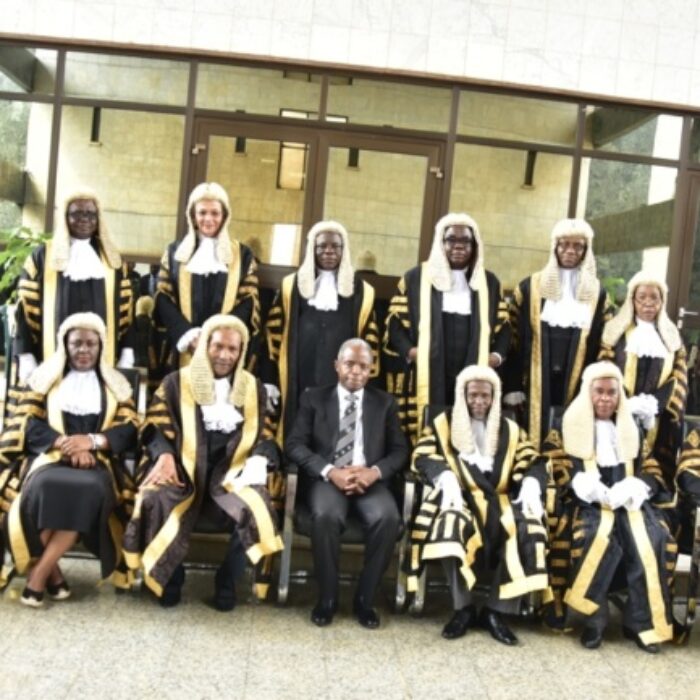
When legislators earn obscene salaries and allowances for doing little or nothing, while millions survive on less than a dollar a day. When judges collect bribes to free the powerful and silence justice. When police officers turn highways into tollgates of extortion, preying on the poor with weapons meant to protect them.
It plays out when elections are rigged and our votes are reduced to a meaningless ritual. When incompetents, thieves, and criminals are recycled into the highest offices in the land every election cycle. When doctors steal medical equipment, drugs, and supplies from public hospitals to stock their private clinics, leaving patients in pain and nurses without tools.
It deepens when university lecturers demand bribes or sex for grades, and underfunded schools churn out graduates unfit for the real world. When religious leaders fleece the gullible and sell false hope, fake prosperity, staged healings, and fabricated prophecies to the desperate, all while enriching themselves and cozying up to corrupt politicians.
It worsens when public officials award contracts to friends and cronies, not the qualified. When pension funds are looted, and the elderly die waiting for what they worked a lifetime to earn. When crude oil vanishes into private pockets while refineries rot and citizens queue endlessly for petrol.
The tragedy unfolds when mediocrity is rewarded over merit, when competence is sacrificed at the altar of ethnicity, religion, and nepotism. When national unity is torn apart by tribal favoritism and sectarian privilege. When public service becomes a license to steal, not a duty to serve.
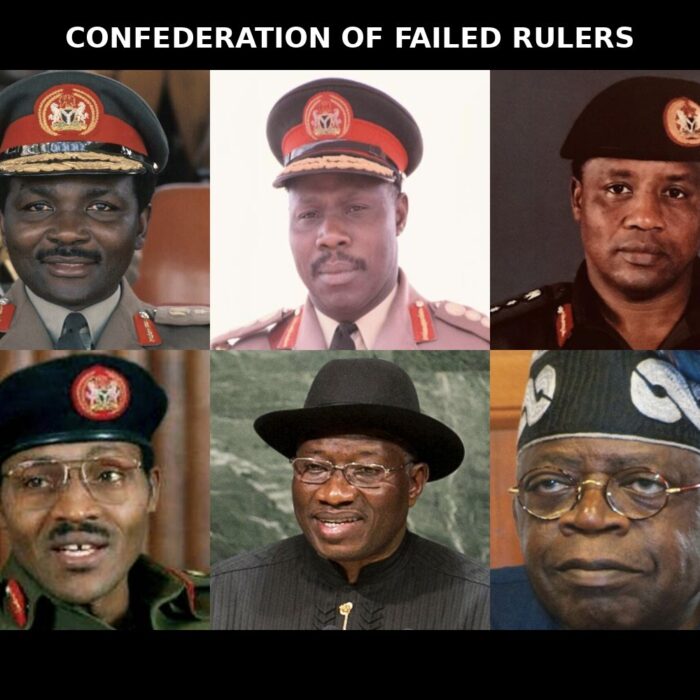
The tragedy is rooted in eroded values, where a man who forfeited $460,000 to the U.S. from a drug case becomes president. Another, accused by a U.S. Senate report of moving over $40 million in suspect funds, including Siemens bribes, and banned from the U.S. for 13 years, also seeks the presidency. A third, who preached clean governance, was exposed in the Pandora Papers for hiding funds in offshore accounts while in office, and has yet to explain the source, yet still wants to lead the nation.
What we have is a rotten system that rewards corruption, punishes integrity, and silences truth-tellers, ensuring the Commons remains broken, and the nation, betrayed.
The government, meant to be the steward of the Commons, has joined in its destruction. Leadership has failed morally, intellectually, and institutionally. Instead of building national capacity, it centralizes power, hoards resources, and protects elite interests through distributional coalitions that serve the few and abandon the many.
The federal structure, far from empowering local communities, has become a bottleneck that extracts without giving back. States wait for handouts from Abuja while the center controls oil, taxes, and major decisions. The president can pick winners and losers through political favoritism, using the allocation of federal projects and resources as tools of reward and punishment. Instead of fostering equity and development, the system centralizes power and fuels corruption.
In this climate, patriotism withers. Why care for a country that gives you nothing but hardship? Why protect public property that is stolen by the elite and neglected by the state? The roads are broken, the schools are empty, the lights are off, and the young are fleeing. Meanwhile, those who benefit from the Commons the most are the ones doing the least to sustain it.
A tragedy becomes inevitable when no one believes the system can be fixed. Voter apathy grows, and citizens lose faith in elections that change nothing. People retreat into resignation, repeating, “Only prayers and God can save us o,” as if divine intervention is the only hope left. In such a climate, personal agency weakens, accountability vanishes, and the will to demand better gradually fades.
But Nigeria is not beyond redemption.
Nobel Prize winner Elinor Ostrom’s research showed that communities can successfully manage the tragedy of the Commons (shared resources) problem through collective action, but only when certain key conditions are in place. These include clearly defined boundaries, inclusive decision-making, fair and consistent penalties for misuse, and mechanisms for resolving disputes.
Her work challenged the idea that only privatization or centralized government control could prevent the overuse of common resources. Instead, she demonstrated that when communities are empowered to set and enforce their own rules, they often manage shared goods more effectively and sustainably.
In the context of our country, this insight points to the urgent need for decentralization. Our country’s highly centralized federal structure concentrates control over oil, taxes, and major decisions in Abuja, leaving states and local communities dependent on handouts rather than self-governance.
Reforming this structure would give local actors more power to manage their resources, craft locally relevant policies, and hold leaders accountable. Real autonomy at the subnational level would encourage the kind of community-driven stewardship Ostrom identified as crucial for protecting the Commons.
Transparency and institutional trust are also vital. We must be able to follow the flow of public funds and monitor how resources are distributed and used at all levels of government. Tools such as open budgets, digital tracking platforms, and citizen-led audits can shine a light on corruption and mismanagement.
Education plays a parallel role: when our people understand that unchecked exploitation of public goods ultimately harms everyone, they are more likely to act as guardians, not just passive citizens.
Rebuilding the Commons that is Nigeria will require systemic reform, active civic participation, and a cultural commitment to shared responsibility. It begins with electing intelligent, visionary leaders who have the courage and foresight to devolve power to states and local governments. Without that shift, Nigeria will remain a broken Commons—plundered, neglected, and slowly collapsing under the weight of its own betrayal.
*About the author
Nnaoke Ufere is a leading voice in African public thought and policy. He writes a weekly opinion column for the African Mind Journal, where his work shapes national conversations on leadership, governance, and reform. A Harvard alumnus and PhD holder in Strategic Management from Case Western Reserve University, Ufere is an influential author, public intellectual, and global development analyst whose insights on U.S.-Africa relations and institutional accountability continue to challenge the status quo and inspire change.