The Editorial Board
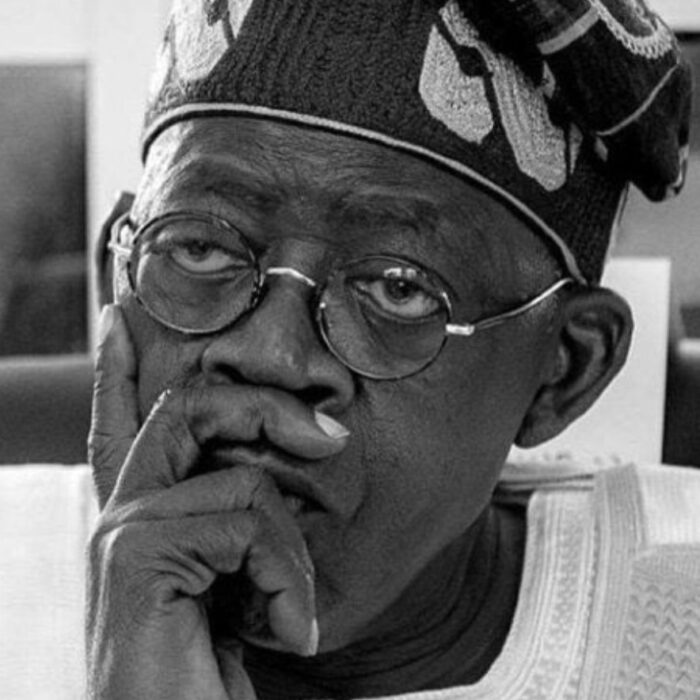
Few leaders in modern African history have had the rare privilege of governing a nation multiple times. Even fewer have squandered that privilege as thoroughly as the late President Muhammadu Buhari.
He ruled Nigeria three times: first as a military head of state from 1983 to 1985, and later as an elected civilian president from 2015 to 2023. Across those years, his record unfolded as a long, painful disillusionment. Once hailed as a disciplined general, a man of rare integrity, and the last hope of Nigeria’s anti-corruption struggle, Buhari ultimately leaves behind a legacy shaped more by disappointment than progress.
While we honor his military record and service to the nation, and wish him eternal peace, his presidencies deserve a political autopsy, not for spectacle but for the sobering lessons they offer. This, in our view, is his legacy to future aspiring leaders.
A Myth Built on Sand
Buhari’s rise was powered not by results but by reputation. His short-lived military regime in the 1980s was remembered not for policy substance but for its aggressive rhetoric against corruption and the infamous “War Against Indiscipline.”
In a nation battered by decades of corrupt civilian misrule, Buhari was mythologized as an incorruptible moral force. That image carried him through four presidential campaigns, culminating in victory in 2015. But as history shows, myths cannot govern nations. Competence, vision, and adaptability, not nostalgia, are what leadership demands.
The Illusion of Change
When Buhari returned in 2015, he promised transformation: to fight corruption, end insecurity, and revive the economy. Instead, his administration deepened the very crises it inherited.
Corruption persisted, merely shifting form. Insecurity worsened, with previously stable regions descending into violence. The economy entered two recessions, while inflation soared and the naira collapsed.
Beneath these failures lay a deeper problem: Buhari governed with a rigid mindset, managerial ineptitude, and a total absence of vision. He was not a leader prepared for the future, but one trapped in the past.
An Intellectually Uncurious Leader
Buhari was notably resistant to critical analysis and new ideas. He did not grasp the complexity of Nigeria’s interlocking problems. He favored simplistic answers over serious analysis. He avoided reform-minded economists, disregarded data, and clung to outdated approaches.
He was visibly uncomfortable around experts, often preferring loyalty over competence. His administration rejected innovation, ignored evidence, and resisted learning. In a 21st-century Nigeria, he governed with a 20th-century mindset.
Disconnected and Uncompassionate
Buhari’s leadership was also emotionally distant. He did not govern as a people-centered leader. He rarely addressed the nation in times of crisis, and when he did, he lacked empathy.
From the victims of terrorism to unemployed youth, from the hungry to the grieving, he remained aloof. His handling of the #EndSARS protests, culminating in the shooting of peaceful demonstrators at the Lekki Toll Gate, revealed not only his authoritarian reflex but also a deep absence of compassion.
A Chronic Aversion to Reform
Despite inheriting a broken economy and a hollowed-out country, Buhari resisted every call for fundamental reform.
He refused to restructure Nigeria’s overcentralized federation. He declined to decentralize policing. He ignored demands for public sector reform. His economic thinking remained rigid, statist, and insulated from global realities.
He clung to fuel subsidies, undermined fiscal transparency, and alienated reformers. Even with political capital and public goodwill, he lacked the strategic capacity to lead a reform agenda. What could have been a turning point became a tragic regression.
The Politics of Exclusion
Buhari’s appointments were markedly unbalanced. His administration disproportionately favored individuals from specific regions and backgrounds, particularly those aligned with his own ethnic and religious identity.
Key national institutions, such as the military, intelligence agencies, central bank, and judiciary, were dominated by figures drawn from a narrow circle of loyalists. This pattern weakened the principle of federal character enshrined in the constitution and fueled widespread perceptions of exclusion and marginalization.
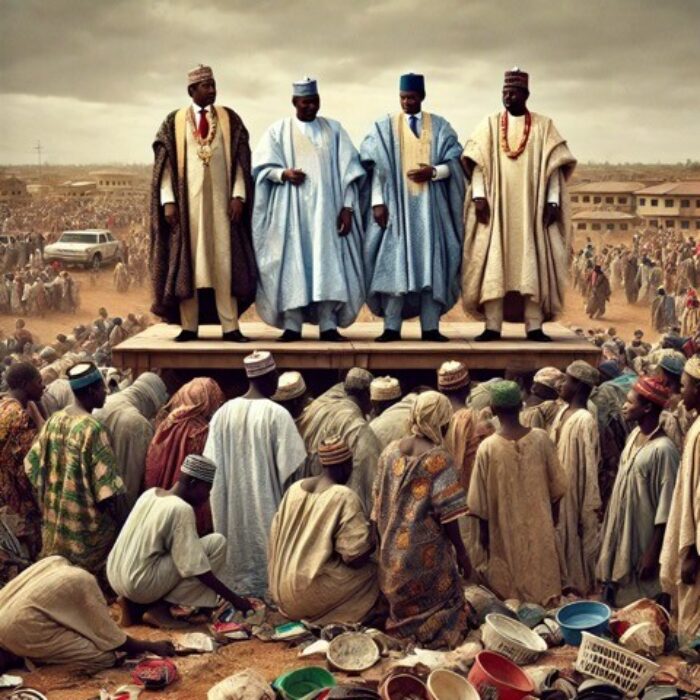
Instead of building a sense of national unity, Buhari presided over a government that reinforced existing divisions. What is most perplexing is Buhari’s neglect of the profound suffering in the North, a region that consistently backed his rise to power. Despite dominating his appointments and political agenda, the North saw little meaningful progress during his presidency. Poverty remained entrenched, millions of children were left out of school, and infant mortality rates stayed among the highest in the country. His leadership offered symbolic representation without real improvement. In the end, Buhari failed not only the North, but the promise of equitable governance for all Nigerians.
The result is a legacy of favoritism that failed to deliver meaningful development neither for those favored nor for the rest of the country.
The Igbo Question
Buhari’s sectionalism was most evident in his administration’s treatment of the Southeast. During his first term in particular, key political appointments consistently excluded the region, reinforcing long-standing grievances about marginalization.
The region was largely ignored in national development plans, and its political grievances were met with military force rather than dialogue. Peaceful movements were criminalized, infrastructure projects routinely bypassed the area, and meaningful efforts at national reconciliation were absent. Instead of healing old wounds, his government deepened a sense of alienation among many Igbos.
Under Buhari, Igbophobia moved from private sentiment to public policy. It is a legacy that dishonors the presidency and weakens the nation.
Authoritarian Instincts and Democratic Decay
Though elected democratically, Buhari ruled with authoritarian instincts. His administration repressed protests, harassed journalists, and used security agencies to intimidate critics.
Courts were undermined. Laws were selectively enforced. Democratic norms eroded. Civic space narrowed. Dissent was criminalized.
He did not see institutions as partners in governance but as obstacles to power. In doing so, he damaged the very framework that enabled his rise to power.
A Failure of Legacy
Perhaps the most damning indictment of Buhari’s time in office is his complete absence of enduring achievement.
There is no signature reform, no transformative project, no institutional legacy. After eight years, with more goodwill than any leader since 1999, he left Nigeria poorer, angrier, more indebted, and more divided.
Legacy is earned through vision, competence, and impact, not mere survival in office. On that count, Buhari failed.
Lessons for Future Leaders Who Aspire to Be President
Buhari’s tenure was not all negative. Despite criticisms of inconsistency, Buhari’s administration implemented some notable reforms. The Treasury Single Account improved oversight of government revenue, while the expansion of IPPIS helped reduce payroll fraud. A whistleblower policy also led to significant asset recoveries. Though unevenly enforced, these measures advanced fiscal transparency and public accountability.
However, his presidency should be studied closely, not to mock, but to instruct. The lessons are clear.
Vision is essential. Leaders must understand where the country is and where it needs to go. Intellectual curiosity matters. No leader can govern well without understanding complexity, engaging experts, and evolving over time.
Compassion is not weakness. It is what connects power to people. Inclusivity is non-negotiable. Nigeria cannot thrive when any region or group is pushed to the margins.
And authoritarianism is not strength. It is a failure of imagination.
Above all, future leaders must understand that legacy is not about how long one holds office. It is about what one builds that endures. Buhari wasted all the opportunities he had to change Nigeria. The next generation must not.
In reflecting on these lessons, we must also confront our collective responsibility. Nigeria is a forgiving nation. Time and again, we have chosen grace over vengeance. We must forgive President Buhari for the errors of his leadership, but we must never forget them. While he may have done his best, his failures, whether through action or inaction, silence, neglect, or force, must remain etched in our national memory as enduring lessons. We owe it to ourselves to remember what went wrong so we never repeat it. True unity is not declared; it is built through justice, inclusion, and a leadership that serves every part of the country with equal dignity.