By the Editorial Board
President Tinubu is in trouble.
For the first time in his long political career, he seems to have lost control both politically and personally. As insecurity worsens, the economy deteriorates, and hunger ravages millions of impoverished families, he appears out of solutions. He feels small and diminished, overwhelmed by forces he cannot master.
Increasingly uncertain and seemingly clueless about how to stem the tide of national collapse, he struggles to respond to mounting pressure from a restless population and an impatient international community. In the tragic sense, he is a leader watching his power slip away while the nation spirals deeper into instability.
This diminishing grip on power and absence of clear direction are reflected in recent developments. Reports show that the insecurity crisis has escalated beyond the government’s capacity to contain it.
Just days ago, twenty-five mostly Muslim schoolgirls were abducted from Government Girls Comprehensive Secondary School in Maga, Kebbi State, where at least one staff member was killed. This single incident alone highlights the growing brazenness of armed groups operating without fear of consequence.
According to the Christian Association of Nigeria, armed men kidnapped approximately 303 students and 12 teachers from a Catholic school in Papiri, Niger State early on Friday, also killing a security official. In Kwara State, gunmen attacked a church, killing two people and abducting worshippers. Taken together, these incidents point to a worsening collapse of state authority.
These killings continue even after President Trump publicly warned that President Tinubu would be held personally accountable for any further loss of life. So far, he has failed to take the decisive action needed to halt the violence or bring the perpetrators to justice.
His reluctance or inability to lead with authority in this moment has intensified the crisis, weakened public confidence, and raised serious concerns about his capacity to confront the terrorism and banditry ravaging the country.
During the campaign, candidate Tinubu repeatedly claimed he understood who was enabling or funding these extremist groups and promised to neutralize them once in office. That promise now stands as a test of his leadership. The moment has come for him to act boldly on those declarations or step aside for someone who can.
Despite clear evidence that the attacks are being carried out by bandit terrorists, the administration continues to incorrectly blame livestock herding conflicts. As a result, if it cannot identify the perpetrators or acknowledge the reality of the crisis, it will be unable to formulate an effective strategy to curb the violence, allowing conditions to deteriorate even further.
At this stage, Tinubu appears to be in a no-win position. In the coming weeks and months, Boko Haram and ISWAP are likely to intensify their attacks, applying more pressure and attracting greater scrutiny of his leadership.
In addition, some political adversaries may seek to exploit the worsening security situation to undermine his administration further, leveraging public fear and frustration to erode his legitimacy at home and abroad.
Consequently, Tinubu seems to be running out of time and options. According to sources familiar with diplomatic discussions, unease is growing in Washington, where influential voices increasingly view him as part of the problem rather than the solution.
We are not in support of foreign interference in Nigeria’s domestic affairs. However, the fact that such conversations are reportedly taking place underscores the seriousness of international concern over the worsening insecurity crisis and its potential spillover effects.
While no official calls for Tinubu’s resignation have been made, quiet discussions suggest that the idea is being considered more seriously than at any time in recent history. This growing external unease reflects a broader perception that the situation is deteriorating and that Tinubu may be running out of time to provide an effective response.
Efforts to obtain comment from the administration went unanswered.
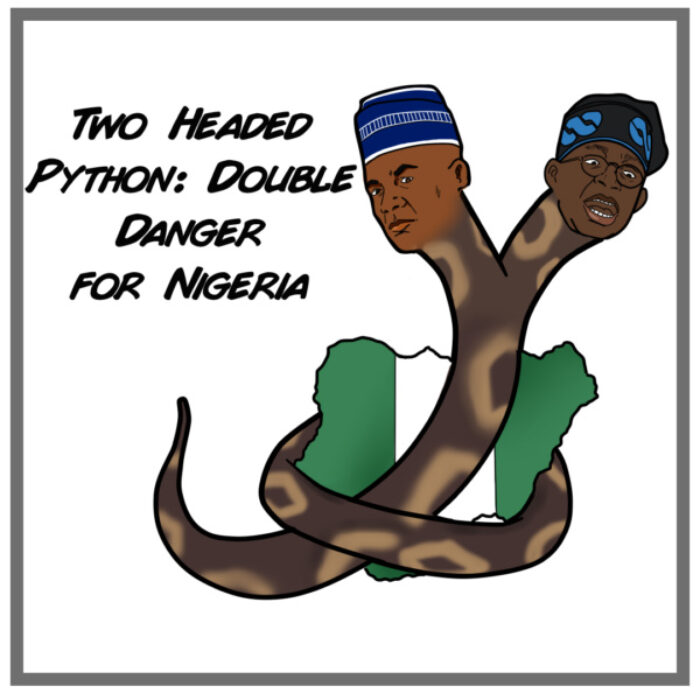
Against this backdrop, and with insecurity worsening and international pressure mounting, decisions regarding Tinubu’s future could soon shift the nation toward a Shettima presidency. Whether such a transition would bring stability or deepen the crisis remains uncertain and sits at the core of the emerging national debate.
The Shettima Dilemma
If Tinubu resigns or is removed from office, Vice President Kashim Shettima would assume power under constitutional provisions. The critical question, therefore, is whether Nigeria would be better or worse off under his leadership.
To answer this, it is important to note that Shettima presents a complex profile. While no verified evidence directly links him to Boko Haram or ISWAP, his tenure as governor of Borno State from 2011 to 2019 raises serious concerns about his capacity to handle a nationwide security crisis.
During his administration, Borno was the epicenter of the insurgency, and Boko Haram expanded its territorial influence despite his direct responsibility for protecting the state. According to data from the Nigeria Security Tracker, thousands of civilians were killed in Borno between 2013 and 2019, making it the most violent state in the country at that time.
Even so, some observers credit Shettima with resilience and strategic insight during the height of the conflict, noting his firsthand experience governing amid extremism.
However, in February 2019, Shettima’s convoy was ambushed by suspected Boko Haram militants while traveling through Borno State. Several news outlets, including Reuters and the BBC, reported that multiple people were killed in the attack. Rather than demonstrating resilience, this incident highlighted the failure of regional leadership to maintain control or protect even high-ranking officials.
If Tinubu steps down, transitioning leadership during escalating violence presents both risks and opportunities. On one hand, Shettima’s familiarity with Northern security dynamics could potentially enable a more targeted response. On the other hand, his close ties to longstanding political networks might reinforce current structural failures.
Although Shettima repeatedly argued that the insurgency could not be solved by military force alone and promoted socioeconomic approaches, critics maintain that this view was overly optimistic given the urgency and severity of the violence.
His soft rehabilitation strategy while governor was seen by some as ineffective in curbing extremist activity. In fact, his critics argued that it may have unintentionally emboldened militant groups, as they perceived the government’s response as lenient and lacking deterrent force.
The fact remains that under his leadership, the insurgency intensified, thousands were displaced, and local governance nearly collapsed in several areas. While he did not create the insurgency, he did not succeed in containing it.
Therefore, elevating Shettima to the presidency at a time of escalating national insecurity raises serious doubts. If he could not stabilize one state, it is unclear how he would manage a crisis affecting the entire country. His leadership approach appears reactive rather than strategic, which Nigeria may not be able to afford at this critical juncture.
It is our view that in the face of rising insecurity, economic decline, and growing public despair, Nigeria cannot afford another cycle of leadership paralysis. Whether under Tinubu or Shettima, what the nation needs now is decisive, accountable, and courageous governance that prioritizes the protection of lives above political interests.
The time has come for actions that match the scale of the crisis. If the current leadership cannot deliver that, it must give way to one that can. The stakes are simply too high for further hesitation; Nigeria’s future depends on what is done next.