By Nnaoke Ufere, PhD*
Tonight, millions of Nigerians will fall asleep exhausted, sweaty, hungry, anxious, and afraid. Not because they have given up on tomorrow, but because suffering leaves them no choice. When morning comes, they will rise again, not to better circumstances, but to the same grinding hardship that tightens its grip with each passing day. Hope has faded, not by their own making, but eroded daily by President Tinubu’s policies that have inflicted starvation, deepened poverty, and fueled insecurity.
Sadly, to live in President Tinubu’s Nigeria is to make constant and painful choices between basic necessities: food or rent, medicine or fuel, school fees or electricity. Some have stopped choosing and simply endure, trapped in a cycle of hardship and ultimately death.
Across the country, mothers stretch what little food they have, calculating every meal as if each grain of rice must last until tomorrow. In Kaduna, fathers leave for work on empty stomachs, hoping the day brings relief rather than more hardship.
In Owerri, children arrive at school hungry and struggle to concentrate, while teachers push through their own exhaustion to keep lessons going. And in Abeokuta, the elderly sit quietly in despair, often in pain, waiting for the day when lifesaving medicine for their diabetes and arthritis is not just available but truly affordable.
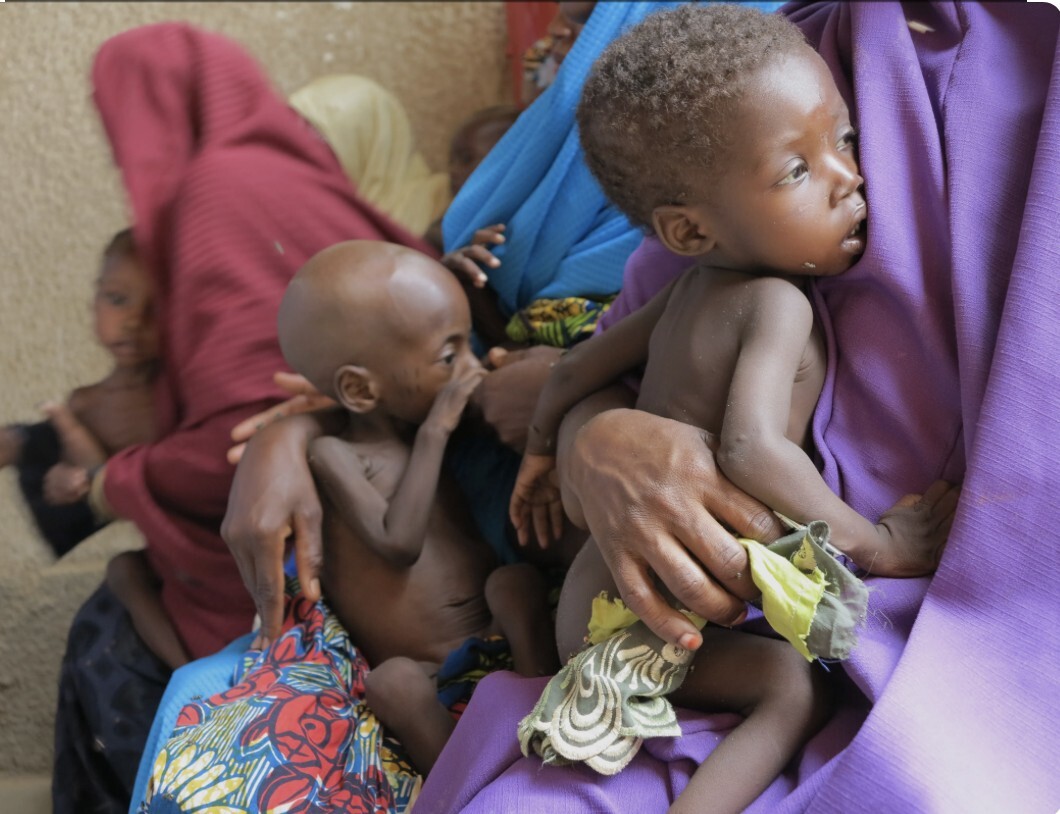
And in Uyo, the human cost of this crisis became painfully clear when two children from the same family died from starvation and malnutrition. Their poor mother had done everything she could to keep them alive, stretching meals, skipping her own food, and seeking help wherever she could find it.
But in a nation where food prices rise faster than wages and support systems have collapsed, her efforts were not enough. The loss of those innocent children is not just a family’s tragedy. It is a devastating reminder of how poverty and hunger is tightening its grip on households across the country.
Under Tinubu, this neglect has grown into a worsening public-health and poverty emergency. According to the UN World Population Prospects, an estimated 2.6 million Nigerians died in 2023 and 2.7 million in 2024.
Experts believe that more than 1.5 million of the deaths recorded in 2024 were preventable. These numbers are not just statistics; they show how policy decisions and mismanagement are directly shaping the lives, health, and survival of families and communities across the nation.
The crisis deepened when subsidies were removed without any adequate safety nets. Inflation surged, and millions of already vulnerable Nigerians were pushed further into hardship, despair, and premature death.
As prices rose sharply, food became unaffordable for many, leading to widespread hunger and malnutrition. At the same time, access to health care collapsed. Hospital bills and essential medicines climbed beyond reach, forcing countless people to endure illness without treatment, and many to die quietly at home.
Consequently, treatable diseases such as malaria, hypertension, respiratory and diarrhoeal infections now claim thousands of lives. Likewise, neonatal conditions and chronic illnesses like diabetes and stroke go unmanaged because basic primary care is inaccessible and unaffordable to most.
Beyond health care, the deplorable living conditions for millions of our people have also worsened. Increasing numbers of people are being displaced into overcrowded or unsafe environments where polluted water and poor sanitation fuel the spread of disease, despite our nation’s natural resource wealth.
Visit the hellholes around any major city like Abuja or Lagos, or step into any remote village, and the bleak reality of how the poor are forced to live does not just unsettle you; it breaks the spirit. The conditions are so harsh, so profoundly unjust, that witnessing them can leave one shaken, especially in a country where politicians and the elite live in staggering luxury, much of it sustained by misappropriated public wealth.
In addition, unregulated industrial activity, oil pollution, unchecked urban growth and the systemic circulation of adulterated drugs and consumer products continue to pollute the air Nigerians breathe and compromise their bodies and health.
Recent evidence shows a large and growing mental health burden in our country, much of it tied to worsening economic hardship and a deepening sense of social anomie under Tinubu. According to public health estimates, between 20 and 30 percent of Nigerians, over 50 million, now experience mental health problems, yet fewer than 10 percent receive professional care.
Reports from the Federal Neuropsychiatric Hospital in Yaba show sharp increases in admissions, which clinicians link to rising financial stress, unemployment and weakened community support. Mental health researchers also note that suicide rates in Nigeria, some of the highest in Africa, have increased alongside economic distress under this administration.
More, according to a 2025 study published in the Annals of Health Research by Olumide T. Adeleke and co-authors, Nigerian university students reported high levels of anxiety and depression. The researchers found that these problems were often linked to an unstable economy, limited opportunities and a growing belief that social structures no longer offer stability or hope. Together, these trends show how hardship and anomie are driving a worsening national mental health crisis.
Ultimately, this crisis is not solely a health issue. Rather, it is the result of policy choices that have deepened poverty, widened inequality and denied millions access to essential services and protection. Therefore, our mortality is rising not because we lack the capacity to recover, but because too many of our citizens are being abandoned to survive in conditions that make recovery increasingly unlikely without a safety net.
Yet the Tinubu government continues to govern with striking indifference, treating the suffering of our people as nothing more than acceptable collateral for its reckless policies. The president appears more invested in safeguarding his political ambitions than in alleviating the crushing realities endured daily by millions of our impoverished citizens.
The critical question now is how long this endurance can last. Can millions of already struggling families withstand two more years of Tinubu’s hardship, and even begin to imagine another four years without meaningful change in leadership?
Under Tinubu, the economy has not simply declined; it has hurled millions of our people into a degrading existence. Salaries evaporate within days. Food prices rise mid-sentence. Rents skyrocket without restraint. Transportation drains earnings before workers even reach their job sites. Electricity, when it appears at all, is accompanied by tariffs that bleed already shattered incomes. Affordability is a national virus.
If the economic collapse were not enough, a deepening wave of insecurity has cast a permanent shadow over families and communities nationwide. Entire regions have turned into killing fields, where lives are taken with frightening ease and the government offers neither protection nor justice. Consequently, insecurity-driven food shortages are now inflicting heavy hardship on communities already living in poverty.
At the same time, our schoolchildren are still being kidnapped, assaulted, raped, and held for ransom. And when the government intervenes, often by secretly paying ransom, though they always deny it, the children who return come back deeply traumatised and emotionally broken. They are left to navigate their suffering alone, with little or no support from the very state that was supposed to protect them.
What is even more alarming is how terrorists can coordinate the kidnapping and transport of 250 schoolchildren across vast stretches of forest without detection by federal and state security forces. Something isn’t adding up.
Worse still, across the country, citizens, both Christians and Muslims, are murdered daily in attacks carried out by armed groups and terrorists. Entire communities have been emptied, farmlands, markets and highways have become danger zones and families live in fear of the next raid.
As a result, these waves of abductions and killings have drawn growing international condemnation, even as Nigeria’s security crisis worsens and the Tinubu administration continues to struggle to protect civilians or bring terrorists, their financiers and their supporters to account.
For many Nigerians, the most painful part is the sense that the government can act decisively when it chooses to, yet refuses to show that same urgency when its own citizens are being slaughtered.
Nigerians watched in disbelief as Tinubu quickly mobilized aircraft and security resources for operations in Benin beyond Nigeria’s borders, and they now question why the same level of force is not directed at the terrorists who operate freely inside the country. To many, it feels as though Tinubu is willing to project power abroad while leaving ordinary Nigerians to face terror on their own.
For many Nigerians, the hopelessness and meaninglessness of life under Tinubu has become a painful reality that makes the promise of a better future feel increasingly out of reach. This Christmas season will be no different. Instead of joy and celebration, millions of Nigerians will confront hunger, insecurity and hopelessness.
Festive lights may shine in Aso Rock, Asokoro, Maitama, Banana Island and Victoria Island enclaves, but for the overwhelming majority of Nigerians, the season offers no comfort. It stands as a painful contrast between the insulated privilege of a few and the daily struggle of millions who face starvation and deaths of despair.
In this heartbreaking essay, in a season that is supposed to usher in joy, I introduce you to the real lived experiences of a broad spectrum of Nigerians from Abeokuta to Zaria, Abuja to Port Harcourt, and from Enugu to Lagos.
The stories you are about to read are not only accounts of individual suffering and death. They show how a government has abandoned the least among us, leaving millions to face hardship with no support, no protection, and no sense that their lives matter to those in power. Tinubu’s failure to protect the most vulnerable and provide even the basic human dignity has set the stage for the crisis that now engulfs the country.
In this unforgiving hellscape, the faces of ordinary people carry the true story of Tinubu’s Nigeria.
Amina, Maiduguri, Borno State
Widowed by insurgency, she wakes before sunrise to stretch millet into porridge for four children. Twice this week, she did not eat so they could eat. When asked about fear, she said quietly, “Hunger finished fear. There is nothing left to fear now.”
Yusuf, Kano City, Kano State
He drives a tricycle through dusty streets, fuel prices bleeding his earnings dry. His newborn arrived at home because the hospital bill was beyond reach. When the child cried at birth, he wept, not out of joy but fear of bringing another hungry mouth into this country.
Hauwa, Jos, Plateau State
A public school teacher who walks an hour to work to save transport money. Her blood pressure rises, but she skips check-ups because the money is better spent on foodstuffs. Two of her children have stopped school. She teaches others while her own fall behind.
Salihu, Birnin Kebbi, Kebbi State
Once proud of his harvests, he now plants only what he can afford to fertilize. On the rare occasions his family eats rice, they eat it plain, with nothing to accompany it. Last month, he sold his radio just to buy farm inputs. “We used to pray for modest wealth,” he says. “Now we pray only for not going hungry.”
Aisha, Sokoto, Sokoto State
A university student who studies under candlelight. Her meals are often nothing more than crackers and water. She forces down her anger when lectures turn to nation-building. “I have no hope for this country,” she admits. “I am trying to build a future in a place where the present is collapsing. It makes me sick each day.”
Chukwudi, Onitsha, Anambra State
His father’s blood pressure medication now costs more than his monthly earnings. He sells rice in sachets because families can no longer afford a bowl. He says, “People do not shop anymore. They negotiate with hunger.”
Funmilayo, Ibadan, Oyo State
A primary school teacher who watches six-year-olds come to class with empty stomachs. Twice this term a child fainted. Her own children now eat once a day. She sometimes steps outside during lessons to cry, wipes her face and returns smiling.
Ebi, Yenagoa, Bayelsa State
Oil spills killed the fish. She rows farther each week and returns with less. Her son left technical school to ride commercial bikes. She says, “Our river carries oil wealth away, but our children go to bed hungry beside it.”
Emeka, Calabar, Cross River State
Emeka is a taxi driver who often sleeps in his cab just to save money. His wife sells water by the roadside. They once talked about building a small house of their own. Now they simply pray the landlord will wait one more month. “Honestly,” he says, “when I see politicians growing rich from corruption, and when I meet young men every day who boast about getting rich through kidnapping, it makes me wonder how a honest person is supposed to survive in this country.”
Glory, Port Harcourt, Rivers State
A nurse who watches patients die from conditions that are easily treatable if medication were affordable. She often leaves shifts shaking from exhaustion and hunger. Many colleagues have migrated. She remains, saying, “If we all run, who will stay with the sick?”
Across the nation, similar stories unfold. One meal instead of three. Half a dose instead of the prescribed medicine. Five kilometres on foot rather than paying for transport. Children pulled out of school. Clothes washed at night because there is no water pressure during the day. Leftover food spoiling because there is no electricity. The rich grow richer while the poor grow poorer. The poor pray while the rich prosper. Faith endures in the very places where government has failed.
Nigerian Youth Must Wake Up and Assert Their Democratic Power
When a government consistently fails to protect its citizens and uphold its duty of care, it weakens the legitimacy that sustains its authority. History shows that when leaders ignore widespread hardship and public frustration, citizens, particularly young people, often become the driving force behind demands for accountability and national renewal.
Around the world, youth movements have proven that organized, peaceful protest is one of the most powerful tools available in democratic societies. In Bulgaria, sustained youth-led demonstrations contributed to the resignation of a sitting government. In Nepal, nationwide civic pressure, driven largely by young citizens, compelled political leaders to step down and triggered significant political change.
In Madagascar, mass youth participation helped reshape the nation’s political direction. Across Indonesia and the Philippines, large-scale youth protests against entrenched interests and harmful policies have forced governments to reconsider or reverse decisions.
These are not fantasies. They are documented realities showing how civic action can transform societies without violence or illegality.
Yet in Nigeria, where young people bear the brunt of economic hardship, unemployment, insecurity, and policy failures, many feel caught between frustration and resignation. Some express their anger only online, while others rely solely on prayer, even as conditions across the country deteriorate.
Neither approach has delivered meaningful change.
Nigerian youths need only look at their counterparts around the world to recognize what becomes possible when citizens engage collectively, peacefully, and strategically.
Across continents, young people are not waiting for elections that may or may not reflect their will. They are using their constitutional rights to assemble, to speak, and to protest as instruments of democratic pressure. Nigerian youth possess the same power, but power matters only when it is used.
This moment is particularly critical. Polls show that an overwhelming majority of Nigerians believe the country is headed in the wrong direction and have lost confidence in the current leadership.
The international community is also pressing the government to protect civilians, address security failures, and ensure accountability. Any peaceful civic demonstration calling for better governance would be closely watched and broadly supported internationally, and any attempt to suppress lawful protest, like this administration and the one before, would draw instant condemnation and repercussions.
Ultimately, it is our citizens, especially the youth, who carry the responsibility and the ability to initiate the civic awakening our country urgently needs. No foreign nation and no supernatural rescue will correct the injustices or stop the suffering. Only organized, peaceful, constitutional action by Nigerians themselves can reshape the nation’s path.
And in doing so, they should remember this. The world supports peaceful democratic movements that demand accountability and justice. To our youth: The power to change Nigeria is already in our hands, and the time to use it peacefully is now.
*About the Author
Nnaoke Ufere is a leading voice in African public thought and policy. He writes a weekly opinion column for the African Mind Journal, where his work shapes national conversations on leadership, governance, and reform. He is the author of Covenant With Nigerians: Reversing Our Country’s Decline. Nnaoke graduated from the University of Nigeria, Nsukka with a first class honors degree in Electrical/Electronic Engineering in 1981. A Harvard MBA alumnus and PhD holder in Strategic Management from Case Western Reserve University, Ufere is an influential author, public intellectual, and global development analyst whose insights on U.S.-Africa relations and institutional accountability continue to challenge the status quo and inspire change.