By Nnaoke Ufere, PhD
Many of my 2.5 million followers reading this article were not yet born during the Biafran War. In fact, the majority of Igbo people living in Nigeria today did not experience it firsthand. Most were born after it ended, or were too young to remember it in any meaningful way. Their parents may have shielded them from its horrors, while their grandparents often went silent, unwilling or unable to revisit a time when death came daily and hunger and disease seemed endless.
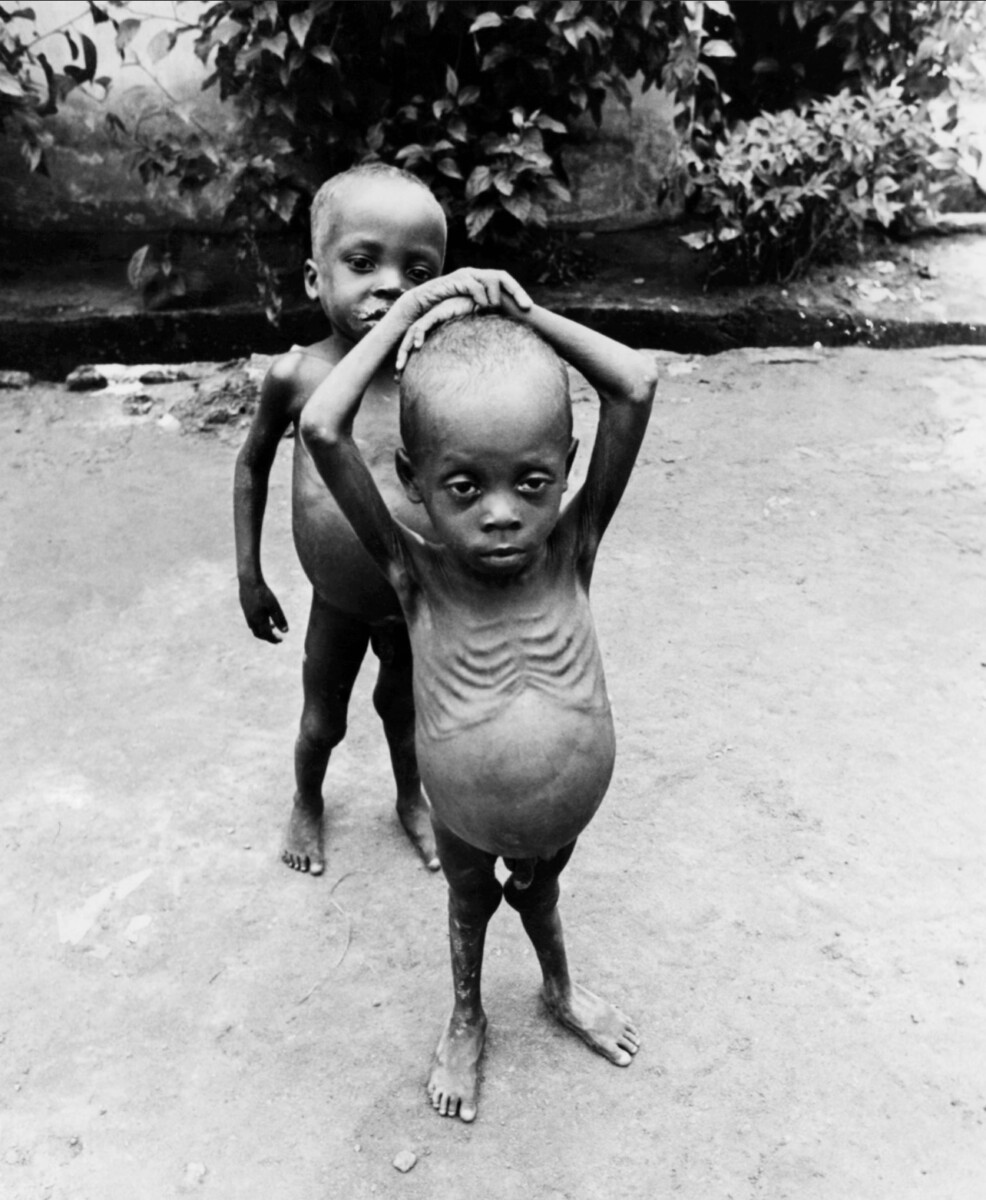
Yet for those who lived through it, the war is not just a historical event but a deep, unhealed wound. The memories remain vivid, a sorrow too painful to share yet impossible to forget. Even now, it lingers in the subconscious. You remember the cries of children dying from starvation, their bellies swollen by kwashiorkor. You recall the silence of homes abandoned by war and the heavy burden of loss that words cannot fully capture.
More than fifty years later, the nightmares still haunt many. In restless sleep, you relive the indiscriminate shelling, the mindless bombing of civilian towns, the shattered limbs strewn across village paths. You remember becoming a statistic, labeled a “displaced person” or refugee, stripped of identity, safety, and home. You recall the desperate hunger that drove people into the jungle, forced to eat anything that moved just to stay alive.
It is against this brutal backdrop that we must remember what was truly at stake. In just three years, two million Igbo lives, including fathers, mothers, children, and entire families, were lost for a cause greater than themselves. They did not die for pity or recognition. Their sacrifice was a defiant protest against a system they saw as denying their humanity and us our freedom. They believed in the right to live with dignity and refused to accept powerlessness as destiny.
I lived through that terrible time as a teenager and carried its weight with me every day. It is from this place of memory and lived experience that I write, not to reopen old wounds or stir up bitterness, but to offer what reflection can teach. I will not be drawn into arguments over who or what started the war, nor into endless debates over blame. Such disputes are not my burden.
My purpose instead is to share the lessons, hard-earned and paid in blood, that we Ndigbo must remember not with vengefulness, but with wisdom, resolve, and a spirit of reconciliation. We must carry these lessons forward with a commitment to justice and unity, so that history is neither forgotten nor repeated.
Because these lessons matter beyond my generation, I hope these words will be carried forward by those who come after us. Let them be written on the hearts of our children, spoken in their gatherings, and passed on in their forums and homes. And let them walk in wisdom, never returning to the errors of their fathers and grandfathers.
Let them also learn that there once was a people who chose to hold on to their dignity when giving up would have been easier. These men, women, and children endured bullets, bombs, and starvation, not for glory or conquest, but to give Ndigbo a chance to one day live in freedom, even if that freedom remains unfinished today. They are our forgotten and uncelebrated heroes, deserving of remembrance and honor.
We owe the dead a duty to carry forward the future they never got to finish. That means rebuilding what they could not, healing our divisions, and loving Igboland not just in words, but through truth, action, and sacrifice. It means engaging with Nigeria, not retreating from it; demanding justice within it, and helping shape its course with courage and clarity.
Their sacrifice must not be treated as distant memory, but as a living inheritance. From this day forward, we who live must live in a way that honors those who died.
We must remember the war not to reopen wounds, but to draw strength and lessons from it. They did not die for tribal bitterness or victimhood. They stood so that we might stand today with dignity and purpose.
They would want us to move forward not by erasing the past, but by rising from it. They would urge us to stop waiting for permission to belong and instead to take our place fully, boldly, and unapologetically as stakeholders in Nigeria, not strangers to it. They would want us to help build the country they never had the chance to finish.
Above all, they would want us to remember the war so we never fight another. And to prove, through the lives we build and the nation we shape, that their sacrifice was not in vain.
Their blood laid the foundation. The responsibility now is ours. And in moments of painful honesty, we must ask: have we truly lived up to that legacy?
Sadly, if those who died could see what we have become, a people sometimes reduced to greed and avarice, self-importance, betrayal, blame-shifting, complaints of victimization, marginalization, and self-pity, they would surely ask, “Is this what we died for?”
The honest answer must be no.
What did they die for?
Decades have passed. Now we must confront the question: What did they die for? For what cause did 2 million souls perish in Biafra? What dream was so sacred that 2 million vanished in its name?
Though we cannot ask them directly, the meaning of their sacrifice speaks through the suffering they endured, the courage they showed, and the future they fought for. From that, we can begin to understand what they died for.
They died so that Alaigbo would be led by leaders who serve, not rule. Leaders with vision, not vanity. Men and women who carry the weight of the people’s hopes with integrity, discipline, and courage. Leaders who build, protect, and uplift, not those who loot, divide, and betray. They died so that never again will Alaigbo be held hostage by incompetence, greed, or tribal puppetry. Their sacrifice demands leadership worthy of their blood.
They laid down their lives so we would rise above the language of marginalization and the posture of victimhood. Their sacrifice was never meant to leave us begging for contracts, bowing before those who once sought our destruction, or trading our dignity for temporary favors.
They gave their lives so we could stand with courage, not shrink in cowardice. Their memory calls us to unity, not betrayal. To dishonor their sacrifice is to waste the blood that bought us a future.
Their hope was that we, the living, would rise with conviction and prove to the world that the Igbo spirit endures—a spirit that refuses to bow to oppression, that rebuilds from ruin, and that insists on the right to exist, to strive, and to flourish.
What they envisioned was an Alaigbo that would emerge as a region of progress, prosperity, and pride, anchored in cities like Aba, Onitsha, Owerri, Awka, Enugu, Abakaliki, and Umuahia.
They imagined Aba, Onitsha, and Nnewi as hubs of large-scale manufacturing and innovation, exporting goods made in Alaigbo across Nigeria and beyond. They saw Owerri and Enugu leading in technology, education, and health. They believed Awka and Abakaliki could power agricultural transformation, and Umuahia could model best practice governance with vibrant small businesses and local enterprise.
Their dream was a bright, thriving Alaigbo where electricity is steady, roads and railways link every major city, where Onitsha and Port Harcourt ports drive a booming export economy. Their blood urges us toward a region-wide “Build-in-Alaigbo” policy that supports local entrepreneurs, protects indigenous industries, and creates thousands of stable, dignified jobs.
They longed for a land where no child is denied a quality education, where every family has access to excellent healthcare, and where decent housing is a right, not a privilege. A land where safety, leadership, and shared purpose guide our communities. That is the Alaigbo they died for. It is not just a dream; it is our responsibility.
They gave their lives so we could excel on our own terms, despite the constraints of the federal system, and show that Ndigbo can shape their destiny, even within a system that resists them.
What they stood against was blind loyalty to corrupt leaders. Not every man who speaks our language speaks for our future. They died so we would speak the language of justice, excellence, and accountability to ourselves, to Nigeria, and to the world.
Their loss reminds us never to follow the path of charismatic delusion. Never again should we go to war unprepared or mistake emotional rhetoric for vision. Above all, their sacrifice warns us to avoid war by every means necessary.
They stood for wisdom, not blind obedience. While we may call for justice in Nnamdi Kanu’s case, we must not surrender our judgment or mortgage our future to one man’s blurred visions and messianic fantasies.
Their hope was for a strong, self-reliant economy, not one weakened by symbolic shutdowns. Every stay-at-home Monday drains our markets, and every riotous Biafra Memorial Day closes our shops and punishes the very people they died to protect. That is self-inflicted harm, not a tribute to their memory.
They saw a future where Alaigbo feeds itself, where farms and agro-industries nourish every table, freeing us from dependency. That vision demands we correct today’s failures and embrace food sovereignty. If we cannot feed ourselves, then we are not truly free.
They imagined a region that leads in education, where schools and research centers power innovation, growth, and societal transformation. A region that sets the gold standard for the entire nation, producing thinkers, builders, and leaders whose talents not only serve Alaigbo but are in demand across Nigeria and around the world.
They dreamed of justice that is swift, fair, and blind to privilege. A law-abiding Alaigbo where every Igbo is equal before the law, regardless of status or connection. A society where laws are not tools of oppression but instruments of fairness, and where courts deliver timely and impartial rulings. They envisioned a justice system that protects the innocent, holds the guilty accountable, and restores public trust.
They yearned for peace built on dialogue, where conflict is resolved without bloodshed and no Igbo is ever forced to flee home. Peace within Alaigbo, rooted in unity and respect. Peace with our neighbors and all Nigerian states, built on cooperation, not suspicion. A peace that secures our future through understanding, not violence. Where “Nzogbu nzogbu, enyimba enyi” is no longer a battle cry but a call to build, not destroy—to fight ignorance with knowledge, and failure with excellence.
They wanted our culture to thrive, where Igbo is taught in every school, spoken at home, and passed down through generations. Where our music, art, and traditions are celebrated in everyday life, shaping how we live, trade, and lead. But today, the Igbo language is fading from the tongues of our youth. That must change.
They hoped for a healthcare system that values every life. One with rural clinics and hospitals that save premature babies, reduce maternal deaths, and treat chronic illness with dignity.
They believed in the potential of Igbo women and youth not to be sidelined, but to lead in boardrooms, laboratories, classrooms, and public life. They envisioned a society where the contributions of women are recognized, valued, and actively supported as essential to progress.
Their vision was never a society plagued by Igbo-on-Igbo violence, where people hide in bushes, kidnap their own, and shift blame to outsiders. They gave their lives for a future built on responsibility, honesty, and justice. To replace that vision with violence and lies is to trample the very freedom they died to secure.
Above all, they died so the next generation would inherit hope, not despair. A homeland governed with competence, integrity, and a shared sense of destiny. That is their legacy. It must now become our mission.
Call to Action: What they want us to do
Their sacrifice demands more than memory. It demands movement. Not just mourning, but momentum. If we must truly honor the Biafran dead, then let us become a people too strong to be ignored, too principled to be bought, and too focused to be distracted.
They want us to, and we must, remain patriotic Nigerians, to be a part of Nigeria, not apart from it. We can no longer be spectators in a country where we have sacrificed, in blood and in death, more than any other group. Where we have built, served, and contributed in every sector, yet are too often treated as outsiders in the nation we helped shape.
They want us to claim our rightful place, not through anger or withdrawal, but through courage, excellence, and full participation. To stand firm in the face of exclusion, not as victims, but as equal stakeholders determined to shape Nigeria’s future with determination and commitment. Our sacrifices give us a seat at the table. No one has a greater claim to Nigeria than we do.
They want us to learn from the experiences of other peoples whose citizens made the ultimate sacrifice. History shows that catastrophe need not destroy a people, it can shape them, strengthen them, and call forth their greatest potential.
The Jewish survivors of the Holocaust lost six million lives, yet they rose from the ashes to build a thriving nation rooted in science, technology, defense, finance, and global influence.
The Armenians, scattered by the 1915 genocide, preserved their cultural identity across continents and built a resilient homeland from the ruins of displacement.
Rwanda, after nearly a million lives were lost in 1994, chose reconciliation over revenge. Today, it is one of Africa’s most stable and fastest-growing nations, grounded in reform and national purpose.
Vietnam, scarred by decades of war and millions of deaths, turned to economic reform in the 1980s. It now stands as an industrial and export powerhouse, with a rising global footprint.
Each of these peoples faced devastation on a national scale yet they chose to rise, not retreat. They embraced memory without being trapped by it. They rebuilt without forgetting. They proved that pain, when transformed by vision and collective will, can become a foundation for greatness.
The Igbos are no less capable. We, too, have known unspeakable loss. But the question is no longer whether we have suffered, it is whether we will rise. Whether we will turn memory into momentum, grief into growth, and tragedy into transformation. Our future is not written in the blood of our past unless we choose to stand still. Now is the time to rise.