By Nnaoke Ufere, PhD*
Politics, like biology, has limits. A parasite that destroys its host does not survive. The host is the source of life and sustenance for the parasite. Only a suicidal parasite, therefore, attempts to destroy its host. A politician who turns against the platform and people that gave him relevance risks political extinction. This is a lesson Governor Abba Kabir Yusuf and his cohorts appear not to have learned.
Against this backdrop, Nigerian politics has increasingly become a marketplace where loyalty is traded, principles are negotiable, and political survival outweighs moral conviction. Party defections are no longer driven by ideology or policy disagreement, but by raw self preservation.
Politicians move not because their beliefs have evolved, but because power has shifted. In this mercantile order, politics is reduced to insurance against political risk, fear of loss, or accountability for malfeasance. Defect early, defect loudly, defect to the center of power, and you may avoid prosecution, retain relevance, or secure protection. What is lost in the process is democracy itself.
The defection of Governor Abba Kabir Yusuf of Kano to the APC fits squarely into this pattern. It is not merely a change of party; it is a profound betrayal of his political origins, his mentorship, and the mass movement that gave him life. These formed the host. He is the parasite who fed on that host throughout his political life, only to turn on it when power shifted.
Abba Kabir Yusuf was politically unknown until he was nurtured, promoted, and defended by the NNPP under the leadership of Senator Rabiu Musa Kwankwaso, and until that point, he was widely regarded as a decent and loyal man.
NNPP platform did not just hand him power. It built his credibility, mobilized voters, and carried him through fierce opposition. To abandon it at the first opportunity is not pragmatism. It is a stab in the back.
This defection also exposes a deeply flawed assumption that continues to dominate elite political thinking. Many insiders argue that when governors defect en masse to the APC, they automatically deliver their states to the president.
This assumption is false. In a truly democratic system, built on the principle of one person, one vote, thirty one governors amount to only thirty one votes. A governor does not own the electorate nor does he carry millions of registered voters in his pocket. Voters are not transferable assets.
The idea that a governor can simply switch parties and carry millions of people along with him misunderstands both democracy and human behavior. Political authority does not erase personal judgment. Voters have memories. They know who they supported, why they supported him, and what promises were made. When those promises are discarded for transactional convenience, resentment always follows.
In Kano, this reality is even more pronounced. Kano is not a politically passive state. It has a long history of ideological politics, mass movements, and popular resistance shaped by figures such as Mallam Aminu Kano, one of my political heroes, who introduced moral leadership into Nigerian politics.
In abandoning the movement that carried him to power, Abba Kabir Yusuf has trampled on the very principles Aminu Kano stood for. The Kwankwasiyya movement was not a coincidence. It was the product of years of grassroots organizing, social investment, and emotional connection with ordinary people. Abba Kabir Yusuf did not invent that movement. He rode on it.
His defection, therefore, does not signal strength. It signals fear. It suggests a governor more concerned with personal political survival and safety than public trust. Many Nigerians understand the unspoken logic behind such moves. Defect to the ruling party and you reduce the risk of investigation and political loss. Remain outside and you risk becoming a target. This is how state power is weaponized and democratic competition is distorted.
However, this strategy often backfires. Voters are not blind to opportunism. When a politician abandons the platform that made him governor, he exposes himself to the charge of ingratitude. In Kano, where loyalty and honor still matter politically, this can be fatal. A leader who bites the hand that fed him risks losing the moral authority required to govern. Politics, like biology, has limits. A parasite that kills its host does not survive.
Governors do wield influence, but that influence is conditional. It thrives only in environments where elections are corrupted by money, coercion, and compromised institutions. In such systems, governors become effective brokers, distributing cash, intimidation, and favors to manufacture electoral outcomes. Remove those distortions and their real standing becomes visible.
This is why the ruling elite invests so heavily in vote buying and electoral manipulation. It is not a sign of confidence. It is an admission of weakness. If loyalty were genuine, money would not be necessary. If performance were convincing, coercion would be redundant. Defections would be irrelevant.
The case of Kano illustrates this clearly. If elections are fair, Abba Kabir Yusuf’s new party label will not protect him from voter judgment. His record, his betrayal, and his motivations will be weighed carefully. Kano voters are capable of separating the office from the individual, and the individual from the party. They have done so before.
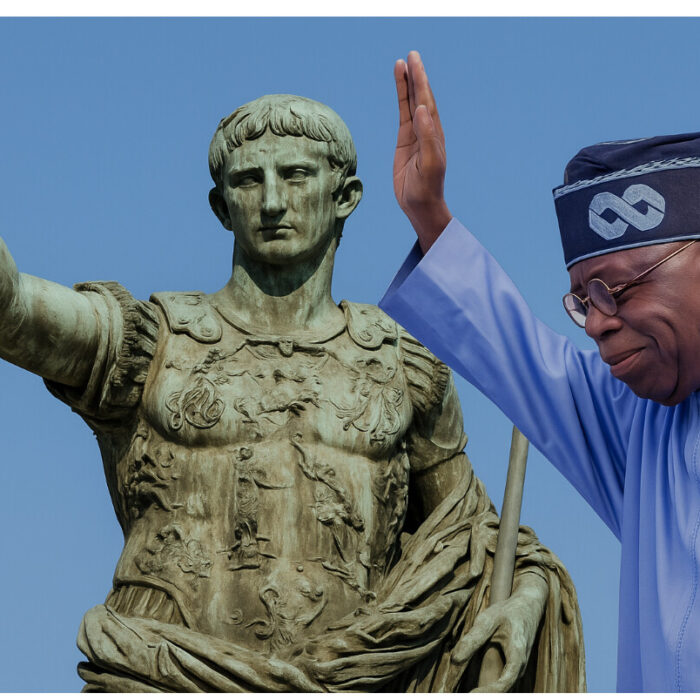
This distinction matters because it punctures the myth of inevitability that sustains authoritarian tendencies. Tinubu’s strength does not lie in mass approval or national consensus. It lies in a system that converts state resources into private electoral advantage.
Governors function as middlemen in this arrangement, not leaders of conscience. When elections are reduced to cash transactions, as is often the case in our elections, morality collapses. When institutions fail, defections multiply, governance becomes performative, and the people pay the price with their livelihoods and, in many cases, their lives.
Yet this system is not permanent. It survives only because Nigerian voters are discouraged from believing in their own power. Once that belief returns, the structure weakens. Governors who defect for protection discover that protection is temporary. Parties that welcome defectors for convenience soon discard them when they become liabilities. It has happened. It will happen again.
For democracy to survive, Nigerians must reject this culture of transactional politics. Defection motivated by fear corrodes trust. Politics driven by self preservation destroys legitimacy. Kano, with its history of political awareness and mass mobilization, has an opportunity to set a different standard.
The future of Nigerian democracy will not be decided by how many governors defect, but by how many voters refuse to be treated as expendable. When voters reclaim their agency, betrayal loses its reward. When that happens, parasites no longer survive, and hosts begin to heal.
**About the Author*
Nnaoke Ufere is a leading voice in African public thought and policy. He writes a weekly opinion column for the African Mind Journal, where his work shapes national conversations on leadership, governance, and reform. He is the author of Covenant With Nigerians: Reversing Our Country’s Decline. Nnaoke graduated from the University of Nigeria, Nsukka with a first class honors degree in Electrical/Electronic Engineering in 1981. A Harvard MBA alumnus and PhD holder in Strategic Management from Case Western Reserve University, Ufere is an influential author, public intellectual, and global development analyst whose insights on U.S.-Africa relations and institutional accountability continue to challenge the status quo and inspire change.