By Nnaoke Ufere*
When asked why he robbed banks, Willie Sutton famously replied, “because that’s where the money is.” Our politicians could hardly put it better.
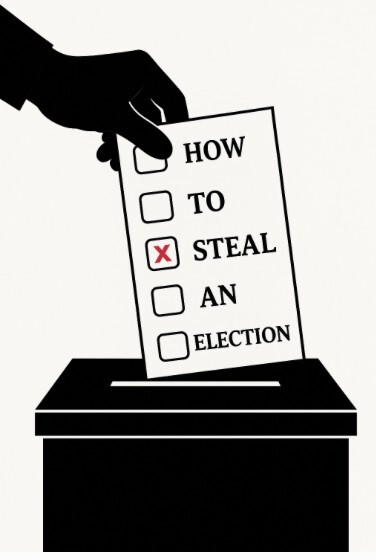
Just as Sutton perfected the art of bank robbery, Nigerian politicians have mastered the craft of political burglary.
Unlike Willie, they don’t storm banks or crack safes. They storm polling units, seize ballot boxes, hijack collation centers, and tamper with results transmission systems.
In their hands, elections become the vault doors to national wealth, and governance becomes the getaway car. Public office is not a call to serve but a license to steal from us.
Sutton knew the essentials of his trade: timing, disguise, escape routes, and inside men. In much the same way, our politicians understand how to seize control of the electoral machinery, infiltrate the institutions meant to safeguard it, and twist the rules of democracy into instruments of plunder.
Unlike Sutton, their weapons are not crowbars, guns and masks but bribery, patronage, intimidation, manipulation, vote buying, ballot box stuffing, and outright vote rigging. Their inside men are not bank tellers and guards but electoral officials, judges, and party operatives. Each election becomes a carefully rehearsed heist, executed with precision, coordination, and the quiet certainty that impunity will protect them.
There will be many Willie Suttons in 2027: local party chieftains, party thugs and enforcers, vote buyers, and fixers who see elections as another cash grab.
But there is only one mastermind who should keep Nigerians awake at night: the man who commands the entire electoral system. He operates in plain sight, cloaked in authority and shielded by institutions he has already captured.
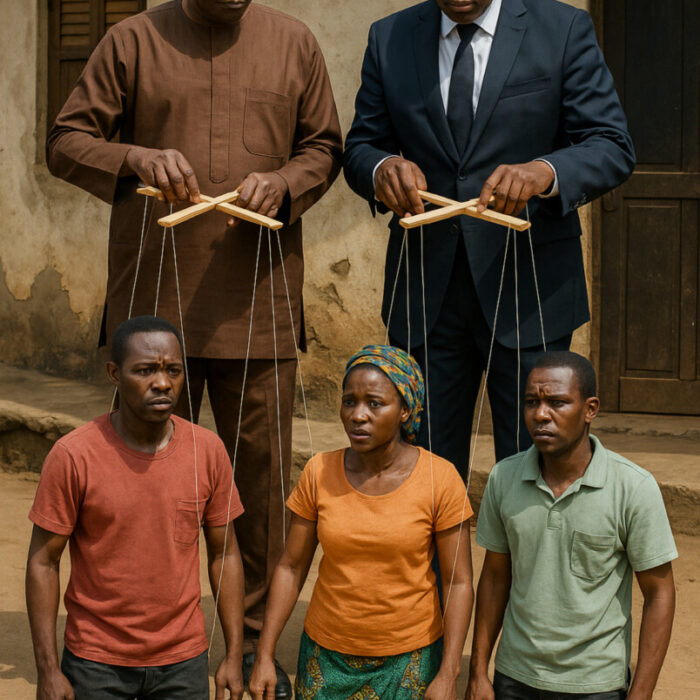
He sets the rules of the game, appoints the referees, and changes the score when the game slips away from him. He does not need to stuff ballot boxes himself; he owns the system that registers voters, prints the ballots, moves them, counts them, collates the results, uploads them, and ultimately proclaims his own victory. If the results are challenged in court, there’s no cause for concern. He owns the courts, and the judges do his bidding.
It was against this backdrop that I convened a cross-disciplinary team of experts in electoral behavior, voter dynamics, institutional vulnerabilities, data analytics and forecasting, and political psychology to model President Tinubu’s likely strategies for staying in office come 2027 election. Our goal was to identify the most probable tactics, and stress-test institutional safeguards.
The team’s analysis revealed several tactics that President Tinubu may employ ahead of the 2027 elections and on the day of the presidential vote. What emerged is sobering: a playbook so formidable it should unsettle anyone who believes defeating him will be business as usual. The projection is grim. The scale and sophistication of the 2027 rigging will make 2023 look like a rehearsal, mere child’s play in comparison.
But just as there are best practices for catching a bank robber, there are also methods for catching an election rigger. Yet I will not reveal them now, not because I don’t know them, but because the mastermind may cover his tracks before the reckoning begins. Not yet.
Below is the theft plan the mastermind is predicted to execute:
- Steal the Presidency
As the incumbent’s policy plunders have devastated millions of Nigerian families and communities, he is keenly aware that he is highly vulnerable in 2027. In fact, without state machinery and electoral manipulation, he will lose the election. But he also knows he has an ace up his sleeve, and he is likely to play it: bend the electoral process to his advantage.
This will be the first move of an emasculated incumbent. Unable to govern well or win freely, he will rewrite the rules of the game, appointing INEC officials who are both able and willing to rig the election for him. Once captured, the electoral body will become the silent instrument of power, not through ballots but through theft.
The rigging will not begin on election day; it will begin months before it. It will start with the appointment of Resident Electoral Commissioners and Returning Officers chosen not for competence but for loyalty. Through them, the incumbent will plant influence in every layer of the system, from voter registration and logistics planning to the printing, storage, and distribution of ballot papers.
The voter register will quietly swell in friendly regions while technical “errors” will suppress opposition strongholds. Logistics will be weaponized to delay ballots where he is weakest and accelerate them where his influence runs deepest. When the results arrive, arithmetic will do the heavy lifting that policy could not in four years.
On election day, the manipulation will wear the mask of procedure. INEC officials will control accreditation, ensuring that systems malfunction in opposition strongholds while voting runs smoothly in the ruling party’s zones. Ballot papers will disappear, reappear, or multiply.
Collation centres will become the real battlegrounds where figures will be massaged, swapped, or delayed under the pretense of technical review. Even the server uploads will suffer temporary glitches, long enough for results to be rewritten before transmission.
By the time the official results are announced, the heist will have been perfected, every fraud hidden beneath the language of bureaucracy: logistical challenges, network issues, and human error.
- Weaponize the judiciary
The incumbent effectively “owns” the judiciary and will not hesitate to use it as a weapon. He is highly likely to deploy his influence over judges and prosecutors to target opposition figures with trumped-up charges.
His agents will file lawsuits against opponents for every imaginable offense, Jonathan for alleged constitutional breaches of term limits, and others for fabricated or exaggerated crimes.
The EFCC will be unleashed to investigate, intimidate, and tarnish opponents, some deservedly, but most strategically, to weaken or silence them before the campaign season begins.
In this climate of selective justice, every time opposition figures are rushed into court while allies walk free, democracy takes another blow.
This pattern will not stop at pre-election intimidation. The “lawfare,” or strategic use of courts to silence rivals, disqualify candidates, and tie them up in endless litigation, will extend into the handling of contested election results. The aim will not be justice but control — the creation of fear, the neutralization of dissent, and ultimately, the theft of votes and election outcomes.
- Attack independent media and flood the airwaves with propaganda
The incumbent has lost the narrative. He has lost credibility with the Nigerian people except those inside his echo chambers. To regain control of public perception, he will turn his sights on the messengers.
He will target and discredit the independent news media while elevating state-aligned outlets to amplify propaganda and drown out dissenting voices. Every critical headline will be branded as “fake news,” and every journalist who questions his policies will be portrayed as an agent of chaos or a foreign stooge.
The truth will become the first casualty. Reports already suggest he is building a massive online operation, an army of trolls, influencers, and automated bots designed to flood social media with lies, distortions, and distractions.
Their goal will not be to persuade but to confuse, to make every fact contestable and every truth negotiable. His digital foot soldiers will swarm timelines, deflect criticism, and smear opponents with relentless ferocity, creating an atmosphere where fatigue replaces outrage and apathy silences accountability.
Journalists and media commentators will not be spared. Those who persist in exposing corruption or electoral malpractice will face intimidation, arrests, and show trials on trumped up charges of libel, sedition, or “cyberstalking.”
Media houses may be raided under the guise of tax violations or national security concerns. Licensing bodies will tighten their grip on press freedom, rewarding compliance and punishing dissent. In such a climate, even the boldest editors will learn to censor themselves before the incumbent does it for them.
- Deploy emergency powers
If the incumbent senses he is losing, he is highly likely to deploy emergency powers to tilt the balance in his favor. He will declare states of emergency in opposition strongholds, deploy the military under the pretext of restoring order, ban all protests, and impose curfews that paralyze civic activity. These measures will be justified as security responses but in practice will serve as instruments of political control.
He has already tested this tactic. In Rivers, he imposed de facto emergency measures through force and intimidation, and in Zamfara, the military was used to interfere in the electoral process without consequence. Each trial run has emboldened him. Having succeeded unchallenged, he will almost certainly use the same playbook again when the stakes are highest.
Each “temporary” suspension of rights becomes a rehearsal for the next. In 2027, the state of emergency will not be a response to crisis, it will be the strategy itself.
- Restrict the witnesses
The incumbent knows that sunlight is a disinfectant, which is why he will attempt to choke off access for election observers. Independent civic groups are democracy’s watchdogs, so he will attempt to muzzle them. He will move to restrict those who might bear witness to the fraud.
Accreditation for independent NGOs will be quietly denied on technical grounds, while international monitors will face bureaucratic delays, shifting requirements, and last-minute rejections. Those few who are approved will be confined to controlled zones, far from where the real violations occur.
Under the familiar pretext of sovereignty and national security, his administration will insist that foreign observers meddle in domestic affairs or threaten national stability.
State media will amplify this narrative, portraying critics as agents of chaos or tools of the opposition. At the same time, domestic civic groups will be harassed through endless financial audits, office raids, and sudden deregistration by the Corporate Affairs Commission.
On election day, the architecture of transparency itself will be deliberately weakened. Access to collation centres will be restricted, media coverage will be tightly managed, and digital transmission systems may mysteriously “fail.” By isolating the process from scrutiny, the incumbent will aim to replace witnesses with silence and truth with official statements.
- Control the internet and surveil dissent
The incumbent and his media machinery are deeply afraid of the internet and the youth who command it. The digital space has become the new public square, one he cannot easily dominate with patronage or propaganda. Young Nigerians shape conversations, drive narratives, and mobilize resistance faster than state media can respond.
Artificial intelligence will be a game changer in 2027, amplifying digital organizing, fact-checking, and citizen journalism. Yet the incumbent understands that he cannot control AI without first disrupting its backbone, the internet itself.
In the digital age, controlling information means controlling connectivity. That is why the regime will turn its attention to the infrastructure of communication. Telecom companies will face mounting pressure to cooperate “in the national interest,” while regulatory bodies such as the NCC will be weaponized to throttle data networks and censor online content.
On election day, mobile data may be slowed to a crawl or shut down entirely in select regions, particularly in urban centers and opposition strongholds. Social media platforms will face covert or overt pressure to take down “inflammatory” or “false” content, a convenient label for any material critical of the ruling party.
Surveillance will form the second front. State security agencies will expand monitoring of digital communications under the guise of cybersecurity and anti-terrorism.
Activists, journalists, and influencers will find their private conversations leaked, their movements tracked, and their associations mapped. Technology meant to protect citizens will be turned into a tool to watch and warn them. Fear of being seen will become as powerful as censorship itself.
By seeking to control the internet, the incumbent will not only be trying to manage information, he will be attempting to cripple the one space where Nigeria’s youth still believe their voices count.
- Buy the elites, not just the voters
The incumbent, being a master of transactional politics, understands that clientelism does not stop at the grassroots. He knows that votes may be bought with cash, but power is secured by buying loyalty from those who already hold influence.
In the coming election cycle, he will not only target ordinary voters with handouts and palliatives; he will invest heavily in capturing the elite class, the gatekeepers of Nigeria’s political and economic order.
Governors will be promised protection from probes and guaranteed access to federal funds if they deliver their states. Members of the National Assembly will be courted with money and committee appointments, lucrative contracts, or the quiet assurance that their constituencies will receive special attention.
Judges will be rewarded with promotions, appointments to tribunals, or discreet financial incentives disguised as welfare packages. Party bosses will receive funding to mobilize support, while local government chairmen will be promised autonomy that never truly comes.
Traditional rulers, chiefs, and emirs will be drawn into the orbit of power with gifts, honors, and access to state resources. Religious leaders will be offered the moral currency of proximity to the presidency, using faith to sanitize politics and bless its corruption.
Business elites will find themselves rewarded with oil licenses, import waivers, and government contracts, until resistance becomes too expensive and collaboration the only rational choice.
By the time the campaign season peaks, opposition coalitions will fracture under the weight of selective generosity. Those who once shouted reform will fall silent after a discreet visit to the Villa.
Those who resist will be isolated, smeared, or starved of patronage. The message will be unmistakable: in the incumbent’s Nigeria, loyalty pays better than principle, and silence is the most profitable form of dissent.
Why calling this out matters
This list is long because the incumbent and the APC are inventive in the ways they suffocate democracy to “win”elections.
And yet, there is hope. Observers who document irregularities, journalists who refuse to be silenced, citizens who refuse to be bought, these are the firebreaks. The Tinubu administration must be made to understand that democracy is more than the act of voting. It is about ensuring that every vote counts, that citizens can choose freely without fear, and that those who lose today have a fair chance to win tomorrow.
That is why citizens, journalists, the international community, and election monitors must study this incumbent playbook to spot it, resist it, and expose it before it becomes irreversible. Awareness is the first defense against manipulation, and vigilance is the last safeguard of our democracy.
The next article in this series will delve into how to stop the steal, and how institutions, the international community, the media, and ordinary Nigerians can use law, organization, and technology to protect the vote and reclaim the integrity of our democracy.
Technology, intelligence, blockchain systems, and crowdsourcing will be central to this effort, empowering citizens to document irregularities, monitor and verify results in real time, and organize against digital repression. Artificial intelligence agents will enhance transparency by detecting anomalies, authenticating data, and protecting communications from manipulation. In the hands of an informed and courageous public, technology becomes more than a means of communication; it becomes a weapon of accountability.
Willie Sutton was caught. So will every thief of the ballot, no matter how high his office, how deft his manipulation, or how deep his pockets. For every masterclass in rigging, there is a masterclass in defending democracy, in preempting rigging before it begins.