Editorial Board
It is difficult to know the true state of the president’s health. In many democracies, citizens are treated as stakeholders in the wellbeing of their leaders, and heads of government are expected to disclose their medical condition as a matter of public responsibility. In Nigeria, the opposite prevails.
We do not even know the president’s confirmed age, and issues relating to his health are treated as state secrets. His frequent trips abroad for medical attention are routinely described as official or private engagements, leaving the public to speculate about what is being concealed.
His recent stumble in Turkey, while inspecting an honor guard alongside President Recep Tayyip Erdogan, again brought these questions to the surface. It was not an isolated incident. His spokesman later claimed the president lost his balance after stepping on an object.
Yet the images told a different story. His host held his hand firmly to steady him, then grasped him by both shoulders to redirect him toward the guards. It was an uncomfortable scene that raised concern rather than reassurance.
Specialists who reviewed his gait during that appearance observed that he walked as though the ground ahead of him was uneven, placing his feet cautiously, as if anticipating sudden changes in elevation. According to their assessment, such movement is consistent with impaired balance or spatial perception, conditions that can produce unsteadiness and dizziness, particularly during motion or changes in direction.
As citizens, it is natural to feel sympathy and to wish the president good health. No one takes pleasure in witnessing physical decline. But these incidents have occurred too often to be dismissed as chance or clumsiness. Repeated stumbles, falls, and visible difficulty with movement warrant more than casual explanations. They demand serious reflection, especially given the weight of the office he occupies.
How many such episodes must occur before the presidency treats health as a matter of national risk rather than a public relations inconvenience? Leadership at this level carries consequences far beyond symbolism. It affects governance, diplomacy, investor confidence, and public morale. Repeated incidents brushed aside with routine denials risk eroding trust and postponing an honest reckoning with an issue that touches the stability of the state itself.
Because so much information is withheld, citizens are left to draw conclusions only from what they can observe. The president rarely grants unscripted interviews. His appearances are tightly managed, his engagements carefully choreographed, and his public image curated to limit scrutiny.
The few moments when he is visible at official functions or delivering speeches become the only windows through which the public can assess whether he retains the physical, mental, and emotional steadiness required to lead the country in demanding times.
What those moments reveal is increasingly troubling. Observers have noted signs of frailty in his public appearances. His movements are often slow and unsteady, his gait labored, suggesting discomfort or physical strain. At several events, he has appeared exhausted or disoriented, sometimes requiring assistance to stand or walk.
His speeches, usually read from a teleprompter, are frequently halting and uneven. Words are slurred, sentences trail off, and long pauses interrupt the flow. His tone often sounds fatigued and detached. There are instances where he appears to struggle with prepared texts, skipping lines, mispronouncing words, or losing rhythm. This was evident during the 2025 Independence Anniversary broadcast and again during the 2025 Democracy Day address, both of which drew public attention for their strained delivery.
Similar patterns were visible during his joint press conference with Brazilian President Luiz Inácio Lula da Silva in August 2025, where his remarks were hesitant and loosely structured, reinforcing concerns already raised by his domestic addresses.
During state ceremonies and televised events, there have been moments when he appeared mentally distant, staring blankly before responding to aides or cameras. He has also been observed intermittently falling asleep. These are not isolated episodes. They are recurring patterns, documented over months and supported by multiple public recordings.
Yet the most disturbing concern is not his physical appearance. It is the manner in which power has been exercised under his leadership. Nigeria’s economy was fragile and insecurity widespread long before his tenure began.
But the choices made since he assumed office have transformed a difficult inheritance into a far deeper national crisis. Major decisions have consistently intensified instability, expanded public suffering, and accelerated deterioration at a pace that stands out even in our troubled political history.
His record is now defined by strategic blunders and policy reversals that have compounded rather than resolved existing problems. The chaotic handling of fuel subsidy reforms, the poorly sequenced currency devaluation, and a borrow and spend fiscal posture have strained public finances and destabilized livelihoods.
These decisions were reinforced by misaligned fiscal, monetary, and credit policies that fueled inflation, tightened liquidity, and constrained productive sectors, while insecurity and social distress worsened.
What emerges from this pattern is a lack of coherence. The result is an economy pulled in opposing directions, undermining stated objectives and eroding confidence among households, businesses, and investors.
The persistence and scale of these failures invite careful and responsible questions about the decision making process behind them. When errors are continuous rather than occasional, and when their consequences are so severe, it becomes reasonable to ask whether judgment, focus, and the capacity for sustained strategic thinking are being adequately maintained.
Accounts from insiders, speaking discreetly to avoid retaliation, describe a leader with an inconsistent grasp of detail, limited consultation, resistance to expert advice, and a tendency toward impulsive decision making. They describe unilateral actions taken without full consideration of consequences and a failure to anticipate outcomes that borders on dereliction of duty. If accurate, these accounts suggest more than ordinary policy disagreement.
Taken together, the issue extends beyond competence. It raises legitimate questions about whether the physical stamina, psychological steadiness, and cognitive clarity required for the presidency are fully intact, and whether the demands of leadership in a period of national strain are being met with the rigor and deliberation they require.
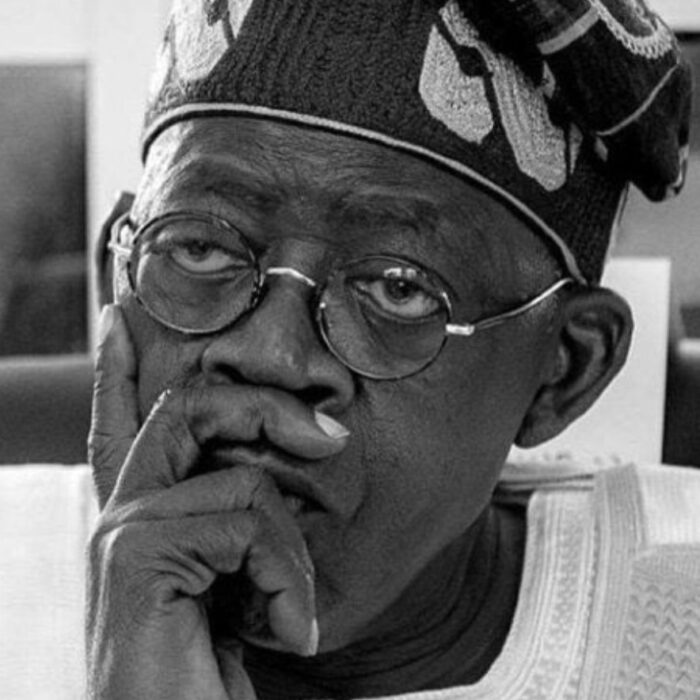
President Tinubu is no longer the figure once credited with spearheading the Lagos renaissance, nor the political strategist known for coalition building and tactical discipline. The presidency has instead exposed a leadership style marked by improvisation, poor judgment, and an apparent inability to manage the scale and complexity of national governance. His actions increasingly reflect a leader detached from realities on the ground.
The country’s accelerating decline under his watch has turned routine governance into a referendum on his fitness to lead. Age related ailments, diminished stamina, and unexplained medical absences have become difficult to ignore. Repeated trips abroad for treatment, often described vaguely as private visits, continue to fuel speculation and deepen concern about the secrecy surrounding his medical condition.
If the president is facing health challenges that impair his ability to govern, the nation deserves honesty, not concealment. The presidency is a public trust, not a personal entitlement. Shielding an incapacitated leader out of loyalty or fear betrays that trust and places the republic at risk. Nigerians have lived through this before, when extended medical absences left the country adrift and poorly governed.
If the president is unable to perform the functions of his office, the Constitution provides a mechanism for succession. The vice president assumes office once duly sworn in. The question, however, is constitutional. Who decides whether the president is incapacitated, and can the current process serve the national interest?
Section 144 of the 1999 Constitution outlines the procedure. The Federal Executive Council, composed of ministers appointed by the president, must by a two thirds majority declare that he is incapable of discharging his duties.
The Senate President then appoints a medical panel of five Nigerian doctors, including the president’s personal physician. If the panel certifies incapacity and the finding is gazetted, the vice president is sworn in.
On paper, this framework appears balanced. In practice, it is deeply flawed. The ministers who make up the council are political beneficiaries of the president. Expecting them to initiate his removal is unrealistic. The Senate President is drawn from the same ruling party and political network. A medical panel constituted through such a process cannot inspire confidence in its objectivity.
The consequence of this reality is a constitutional trap. No matter how impaired a president may be, the process for declaring incapacity remains firmly in the hands of loyalists whose political survival depends on his continued hold on power.
Other institutions offer little reassurance. Legislative oversight is weak, judicial independence is constrained by patronage, and checks and balances function more as formalities than as effective restraints. In practice, the system is structured to protect the presidency, not the republic.
In that context, if the executive, legislature, and judiciary cannot impartially determine incapacity, responsibility must shift beyond formal institutions to moral judgment and democratic accountability. The first and most dignified path lies with the president himself.
There remains a clear moral choice. President Tinubu should commit now to not seeking reelection in 2027, even if nominated by his party. Leadership is not defined by the determination to retain power, but by the wisdom to relinquish it when the national interest so requires.
In the United States, Joe Biden chose not to pursue a second term, recognizing that age, capacity, and national stability mattered more than personal ambition. Nigeria deserves the same clarity. Stepping aside would be an act of responsibility and statesmanship, and history would judge it far more kindly than an insistence on power at all costs.
Should the president refuse this course, the responsibility then falls squarely on the Nigerian people. In the absence of functional constitutional remedies, the ballot box in 2027 becomes the final safeguard. Democracy ultimately rests not on institutions alone, but on citizens willing to use their vote to defend the future of their country. If moral restraint fails at the top, electoral judgment must prevail below.