By Nnaoke Ufere, PhD*
Confronted with economic malaise, epileptic power supply, collapsing infrastructure, mounting debt, rampant corruption, soaring inflation, mass unemployment, worsening insecurity, widespread hunger, and deepening poverty, President Tinubu has not fought. He has fled.
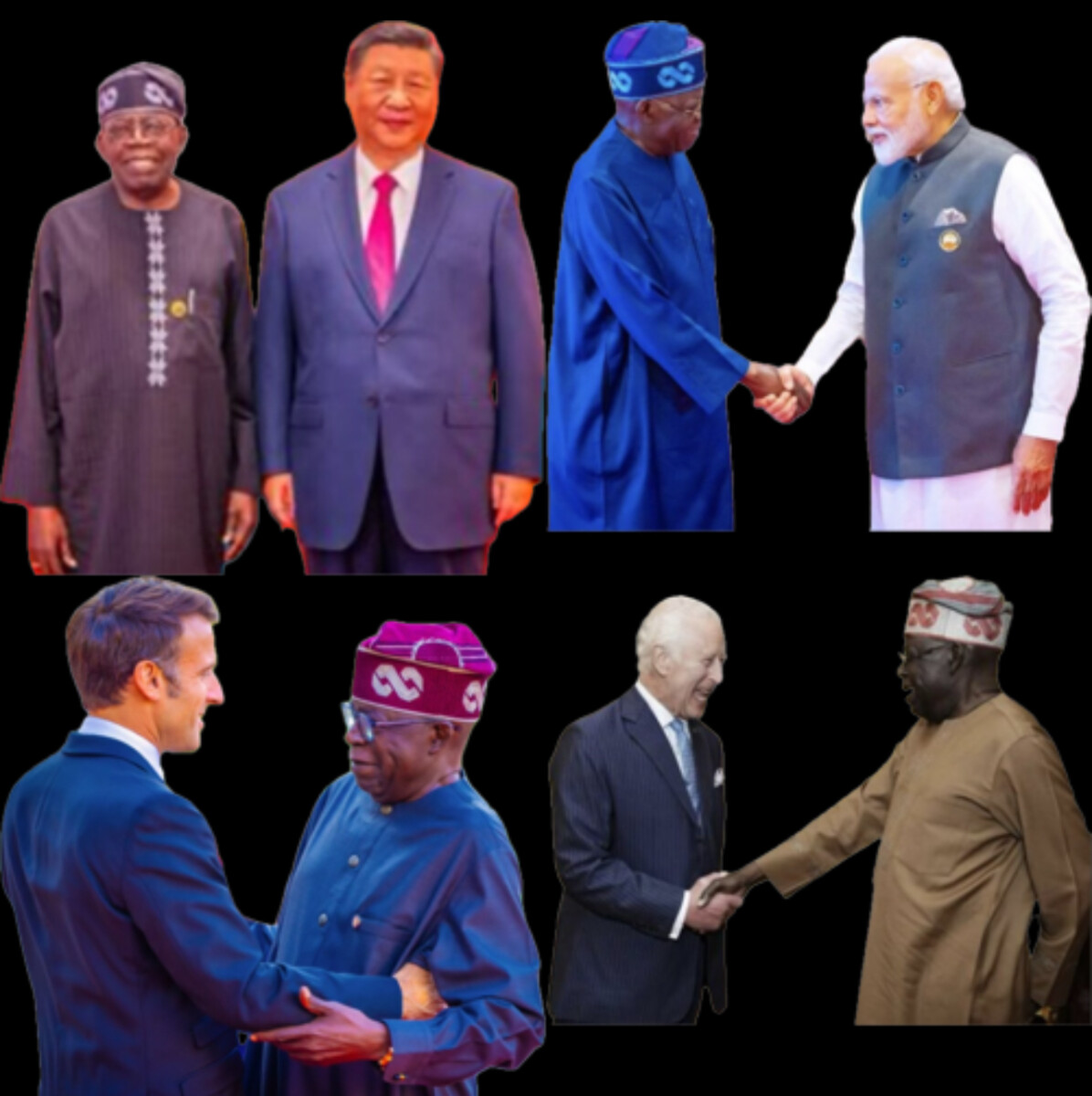
Instead of confronting Nigeria’s crises head-on, our leader takes flight abroad, cap in hand, begging for funds that will never come. He chases red carpets, photo ops, and handshakes while the real battles that affect us are left unfought at home. Each night, millions of our children go to bed hungry while he dines lavishly at state banquets overseas, far removed from the hardship we face daily.
What makes this even more painful for us as citizens is the sheer cost of these excesses. It drains more than $77,000 per day just to keep the presidential jet deployed abroad. At a time when our families struggle with poverty, hunger, and insecurity, such reckless spending underscores the widening disconnect between Tinubu’s priorities and our suffering.
Since taking office, he has indulged in a costly whirlwind of foreign trips to China, India, the United Arab Emirates, Saudi Arabia, Qatar, Brazil, Japan, Britain, Germany, France, Saint Lucia, Guinea-Bissau, Ethiopia, Senegal, Kenya, Benin Republic, the Netherlands, the United States and more, each choreographed with lofty claims of “historic agreements” to transform Nigeria, yet with little to show for it at home.
An important dimension of this constant travel is that it reveals a president in search of international respect and legitimacy — something that has consistently eluded him at home.
By seeking validation on foreign soil, he hopes to project strength and acceptance abroad, even as his leadership struggles to command the same confidence among us, the very people he was elected to serve.
This desperate pursuit of global recognition, however, only underscores the widening gap between the polished perception overseas and the harsh realities we continue to endure within our own borders.
Moreover, Tinubu’s much-trumpeted foreign “historic agreements” remain little more than paper promises, with no real investment or trade deal to justify the staggering costs of his endless globetrotting.
In this sense, the showmanship abroad mirrors the familiar pattern at home: grand gestures and impulsive policy declarations, quickly followed by scant execution and a weary citizenry left to wonder what, if anything, has been gained from the spectacle.
For example, his much-publicized trip to China yielded thirteen agreements covering infrastructure, training, technology, agriculture, and media, all trumpeted as gateways to progress.
One year later, nothing has materialized. The Belt and Road “plan” remains a slogan, the promised training programs never began, Beidou integration is absent, peanut exports are unchanged, and media cooperation has amounted to empty talk.
The one exception: the administration reopened the first phase of the Chinese-built light rail network in Abuja, a tangible infrastructure project signaling some follow-through.
In Brazil, another round of memoranda of understanding (MoUs) on energy, aviation, agribusiness, and trade will likely meet the same fate: lofty announcements without delivery.
Overpromise and underdeliver has sadly become the hallmark of this administration, and we, Nigerians, are the ones left to carry the burden. Instead of tangible progress, we are forced to endure the consequences of empty diplomacy and a government more concerned with image abroad than results at home.
The lack of tangible results from the globetrotter-in-chief is no secret, and it has become increasingly obvious even to the nations he courts. Those he approaches for investment are not deceived by empty promises of returns in Nigeria under his administration. They understand value for money, and they know exactly where to allocate their capital productively to maximize returns. Today, only vulture investors circle Nigeria, scavenging for roadkill in an economy bled dry.
Indeed, the reasons for this reluctance need no lengthy analysis. Operating costs are soaring. There is no reliable electricity. Supply chains are broken. Businesses face relentless extortion. Insecurity is pervasive. Corruption is widespread. Skilled labor is scarce. Foreign currency risks keep rising. Together, these create a hostile environment for investment. The steady flight of companies shutting down operations in Nigeria only reinforces this damning verdict.
Together, these conditions stand as undeniable evidence of President Tinubu’s economic mismanagement and eroded credibility. He leaves little credibility for any foreign partner to take his promises seriously. In the end, he can’t mask the deep structural failures that continue to drive investors away and leave our economy in decline.
The Path President Tinubu Must Take
The roots of Nigeria’s most urgent problems lie within our own borders, the result of decades of failed leadership. The solutions to these myriad challenges can only come from focused and accountable governance at home, not from endless foreign trips.
No amount of jet-setting will fix chronic power shortages, mass unemployment, runaway inflation, crumbling infrastructure, failing schools, insecurity, hunger, corruption, electoral malpractice, oil theft, judicial compromise, or reckless economic mismanagement.
Foreign agreements only work when anchored on sound governance at home. This is why President Tinubu must park his jet and focus squarely on the difficult work of rebuilding Nigeria. Instead of chasing handshakes abroad, he should:
- Fix the Power Sector: Rehabilitate generation and distribution, enforce metering, and remove transmission bottlenecks so industries and workshops can function reliably.
- Strengthen Logistics and Security: Build and maintain supply chain networks while guaranteeing safety for citizens and businesses.
- Rebuild Infrastructure: Expand and modernize roads, rail, and ports to unlock long-term growth.
- Invest in People: Deliver quality education and healthcare, ensure food security, and make housing and basic necessities affordable.
- Boost the Economy: Support innovation, entrepreneurship, and local industry through access to capital, fair markets, and efficient regulation.
- Uphold Rule of Law: Guarantee an independent judiciary, fight corruption decisively, and enforce contracts to build trust.
- Reform Politics: Secure free, fair, and transparent elections to stabilize democracy and restore investor confidence.
- Practice Authentic Leadership: Leadership, in the end, means being present. It requires empathy, sustained attention, and flawless execution of steps 1 to 7 above. This cannot be practiced from 35,000 feet in the air.
These are the unglamorous but essential reforms that turn paper MoUs into real progress: jobs, growth, and dignity for Nigerians. Until this groundwork is firmly laid at home, foreign partnerships will remain hollow promises.
That is why Tinubu must stay home. He must remain here long enough to pull the critical domestic levers that no foreign government can move on our behalf. Only when those foundations are secure will the overseas handshakes amount to something tangible: factories that produce, exports that grow, jobs that multiply, and wages that lift citizens toward real prosperity. Until then, another speech abroad is just that—empty speech.
About the Author
Nnaoke Ufere is a leading voice in African public thought and policy. He writes a weekly opinion column for the African Mind Journal, where his work shapes national conversations on leadership, governance, and reform. He is the author of *Covenant With Nigerians: Reversing Our Country’s Decline*. Nnaoke graduated from the University of Nigeria, Nsukka with a first class honors degree in Electrical/Electronic Engineering in 1981. A Harvard MBA alumnus and PhD holder in Strategic Management from Case Western Reserve University, Ufere is an influential author, public intellectual, and global development analyst whose insights on U.S.-Africa relations and institutional accountability continue to challenge the status quo and inspire change.