By Nnaoke Ufere, PhD*
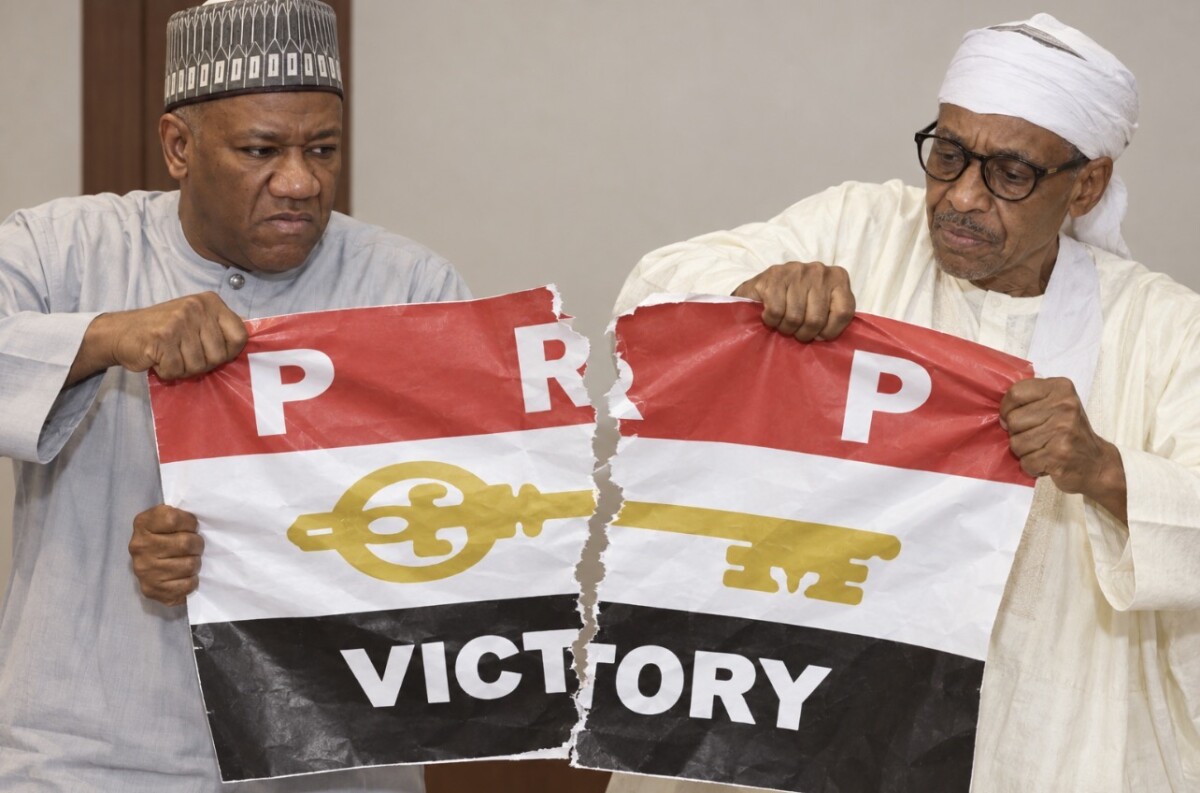
The Baba-Ahmed brothers joined the PRP earlier this year. They did not acquire it. Holding the chairmanship and providing its principal financial support gives them responsibilities to the party, not ownership of it. Their conduct deserves an unequivocal rebuke, as does the silence of those allowing them to take control.
A party established more than five decades ago cannot be reduced to an organisation in which two brothers speak as they please, present their personal opinions as official policy and expect everyone else to accept it.
Their stream of commentary on political issues offers no coherent policy statement that clearly articulates the party’s agreed position. A television interview cannot commit the PRP to the chairman’s personal position. A social media post cannot turn his brother’s political grievance into a party dispute.
Their private enemies do not automatically become the party’s enemies. Nor can they use the PRP platform as a Trojan horse for personal ambitions and political battles that members have neither debated nor endorsed. The PRP has a constitution, governing bodies and members whose rights do not depend on either brother’s approval.
The chairmanship is an office governed by rules. Financial support is a contribution, not a purchase. Neither entitles its holder to bypass consultation, disregard party decisions or substitute personal ambition for collective purpose.
The brothers must stop treating television appearances and social media statements as opportunities to announce positions the party has not considered or authorised. They are entitled to personal opinions. They are obliged to distinguish those opinions from the position of the PRP.
When they contradict the party’s general position while speaking with the authority of their roles, they create confusion for members, candidates and voters. The evidence is flagrant, and their contradictory and inflammatory statements under the PRP banner are too numerous to list here. Turn on the television or visit the PRP members’ WhatsApp group: the examples are there for members to see.
Their responsibility is to help build an organisation capable of supporting candidates and winning elections. That requires planning, coordination, resources and sustained work across presidential, federal and state campaigns. Promoting themselves while neglecting that responsibility is a failure of leadership.
The National Executive Committee must answer for its own conduct. Its members accepted offices with duties attached. They cannot retain their titles while surrendering their authority to the chairman and his brother.
Where is the insistence on consultation? Where is the enforcement of collective decisions? Where is the response when personal statements are presented as party policy?
An executive committee that refuses to exercise its responsibilities enables the very conduct it should restrain. Its silence gives the brothers room to proceed and leaves the membership without effective representation within its own party.
The Board of Trustees deserves equally direct criticism. Trusteeship carries an obligation to protect the institution, including when doing so requires confronting influential people. A board that watches the party’s constitution being disregarded and declines to intervene is failing that obligation.
The board must explain what it is protecting if the party’s independence, constitutional authority and collective leadership can all be subordinated to two individuals.
Grassroots members must also confront their part in this failure. Closing your eyes does not preserve unity. It allows decisions about your party to be made without you. Complaining privately while remaining silent in party meetings leaves those responsible free to claim acceptance.
Members have every right to demand answers. They should insist that their representatives raise these matters formally, that the executive committee account for its decisions and that party rules apply to everyone. Loyalty to the PRP requires defending its constitution even when the people disregarding it hold office or provide money.
The necessary steps are clear. The National Executive Committee must formally address the brothers’ conduct, establish which public positions carry party approval and enforce the constitutional requirements for consultation and decision-making. The Board of Trustees must insist on accountability. Members must demand a credible campaign strategy that serves candidates across the country.
Several members have asked whether the PRP National Chairman can be removed before the end of his term. The answer is affirmative yes. The constitution provides for this, subject to procedures that protect both the party and the chairman’s rights.
There are two routes:
- A vote of no confidence. Article Seven(b) requires support from at least two-thirds of the full membership of the executive committee to which the officer was elected. For the National Chairman, the wording points to the National Executive Committee. The threshold is calculated against the committee’s full membership. Achieving a meeting quorum alone does not satisfy it. The chairman retains a right of appeal.
- Disciplinary proceedings. Article Six permits removal from office for established constitutional breaches and other specified misconduct. This requires the appropriate disciplinary process, due process and a fair hearing. An affected member has 30 days to appeal to the immediately higher party organ.
Resignation is a separate, voluntary option. Under Article Seven(c), the chairman can resign by submitting a letter to the Executive Committee of any party organ or structure. The communication must come from him personally and cannot be made by proxy.
A political party that asks Nigerians to trust it with public power must demonstrate that it can govern its own affairs responsibly. It cannot demand accountability from others while excusing personal rule within its leadership.
The PRP belongs to its membership. The Baba-Ahmed brothers must respect that fact. If they cannot accept the limits and obligations of collective leadership, they have no business leading it.
And those who continue to accommodate this takeover must accept responsibility for what they are helping to create: the Baba-Ahmed Party operating under the PRP’s name.
*About the Author
Nnaoke Ufere is a leading voice in African public thought and policy. He writes a weekly opinion column for the African Mind Journal, where his work shapes national conversations on leadership, governance, and reform. He is the author of Covenant With Nigerians: Reversing Our Country’s Decline and the forthcoming book Creative Destruction: A Radical Blueprint for Making a New Nigeria. Nnaoke graduated from the University of Nigeria, Nsukka with a first class honors degree in Electrical/Electronic Engineering in 1981. A Harvard MBA alumnus and PhD holder in Strategic Management from Case Western Reserve University, Ufere is a venture capitalist, influential author, public intellectual, and global development analyst whose insights on U.S.-Africa relations and institutional accountability continue to challenge the status quo and inspire change. He is a lifetime member of the Peoples Redemption Party.